 4
 0
With almost 200 countries in the world, international political coverage still tends to have a habit of returning to the same large players. My goal with this series, The Political Atlas, is to attempt to look elsewhere. Choosing a random country each week, using it as the starting point for exploring one political question, institution or debate, and hopefully each week learning about politics beyond borders.
Our first stop is Costa Rica! Better known internationally for its beaches, rainforests, and biodiversity rather than its political institutions, this small Central American country, however, has something that makes it remarkably unusual. It has survived for nearly eight decades without a standing army. In a world where military strength is often treated as fundamental to a state’s survival, Costa Rica poses a surprisingly simple question: Can a country really survive without one?
Ironically, Costa Rica’s decision to abandon its military came directly after a war. In 1948, a disputed presidential election triggered a short but bloody civil war. José Figueres Ferrer and his National Liberation Army emerged victorious, yet instead of consolidating military power, the new political order moved in the opposite direction and abolished the army.
Costa Rica’s 1949 Constitution later codified this decision, prohibiting a permanent army as an institution of the state and instead making civilian police and security forces responsible for maintaining public order. This was particularly significant given what was happening elsewhere in Central America during the decades that followed, as neighbouring states experienced military governments, coups and devastating civil wars; Costa Rica developed a reputation for democratic stability and peaceful political competition.
This raises a more interesting question than the one of how Costa Rica survived without an army. But could not having an army actually have helped its democracy survive? One argument for abolishing an army is straightforward: militaries are expensive, and without a permanent armed force to maintain, money can be spent elsewhere.
So, Costa Rica was able to place greater emphasis on social programmes and invest in areas such as education and healthcare, which inevitably became an important feature of its post-war political settlement, creating an attractive national story: money that could have paid for soldiers could instead pay for teachers, hospitals, and public services.
However, reducing Costa Rica’s political stability to merely swapping armies for classrooms would be too simple. The post-1948 settlement represented a much wider transformation of the state. Civilian institutions were strengthened, and an independent electoral authority helped establish peaceful political competition. Abolishing the army was therefore not a magic solution, but one component of a broader democratic settlement.
On the other hand, there is also an obvious problem with the idea of a military-free state, which is that removing an army does not remove threats. Costa Rica still maintains police, border and specialist security forces, while organised crime and drug trafficking have increasingly challenged security across Central America. Costa Rica did not abolish security in 1948 but instead organised it differently.
Additionally, its approach could not necessarily work everywhere. Geography, history and the international system matter; a small Central American democracy faces very different security circumstances from a country confronted by an immediate military threat. Costa Rica, therefore, offers an interesting political experiment rather than a universal blueprint.
Yet its experience still challenges a basic assumption about political power. Military strength is often considered inseparable from sovereignty and the idea that a state is secure because it possesses the ability to defend itself. Costa Rica suggests that security might also come from strong institutions, political legitimacy, international cooperation and investment in society. The absence of an army did not single-handedly create Costa Rican democracy. But removing the military as a potential political actor may have helped create an environment in which civilian institutions could become stronger. Nearly eight decades after making that decision, Costa Rica remains without a permanent army.
That does not prove that armies are unnecessary or that Costa Rica has discovered a model that other countries could replicate. But it does leave us with a fascinating political question: when we talk about making a state secure, should we ask only how well it can defend itself, or also how well it can build a society worth defending?
Next week, The Political Atlas goes somewhere completely different.
Edited by Emily Hone
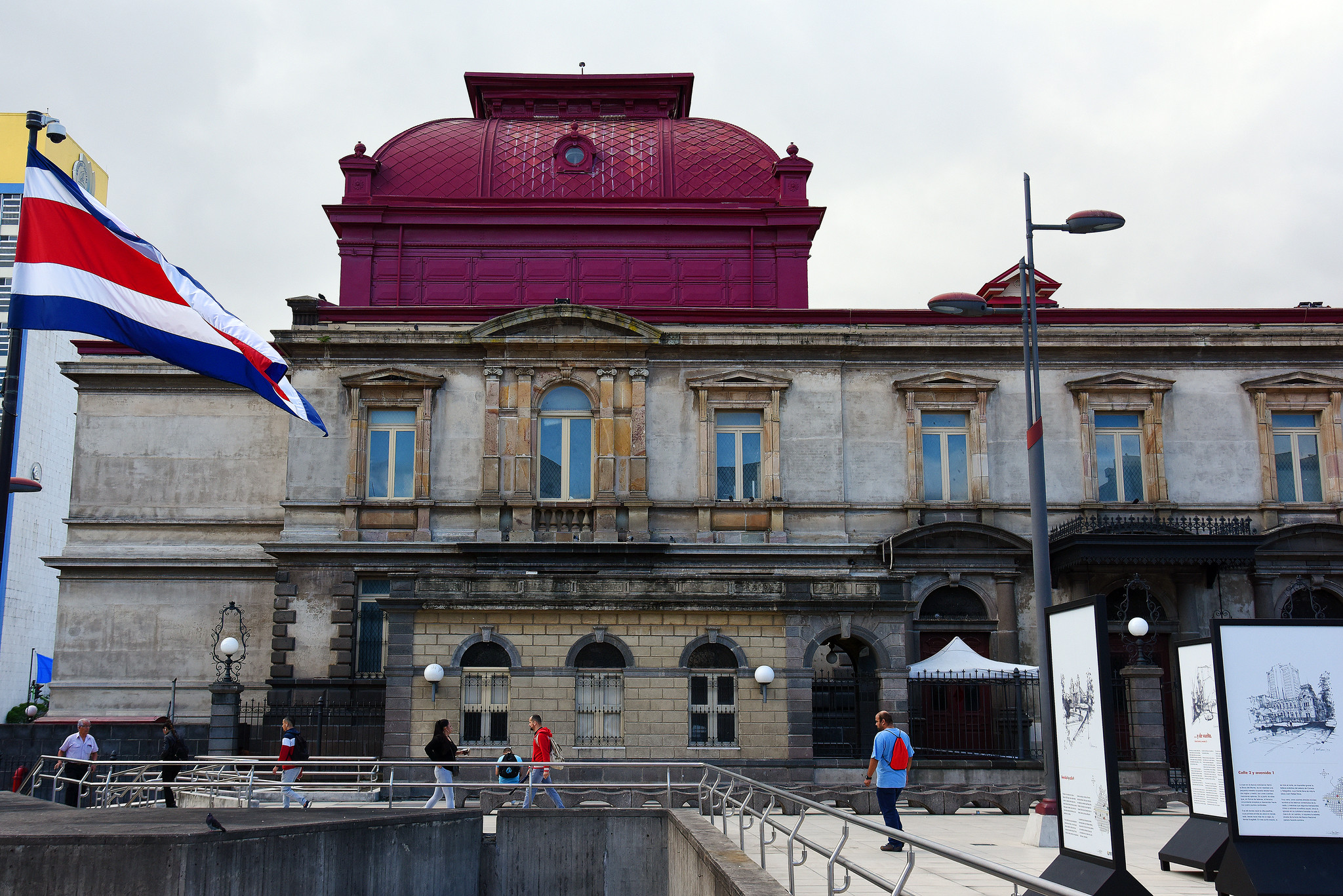
Image: San José_2019 by HBarrison, 2019 // CC BY-NC-SA 2.0




Average Rating