 4
4
 0
0
In the last few months, it was revealed that the BBC had edited a video of Trump in January 2021 for a Panorama programme to make him look more implicated in the January 2021 Capitol riots. This caused an uproar from people across the political divide, and fuelled Trump’s disdain for the BBC, causing him to sue the BBC for a billion dollars.
I agree that the BBC made a grave editing error, but the fierce criticism against the BBC from critics like Trump highlights a growing issue of bias and partiality in the media. Regardless of your political affiliation, impartial and unbiased media is vital to a political society, and being able to easily access news written without intentional bias is imperative. The BBC’s intention of being an impartial media source is something we still vitally need, and this article will detail why the rise of social media echo chambers, far-right news outlets and a growing rise of rich individuals controlling media is something that should worry us all.
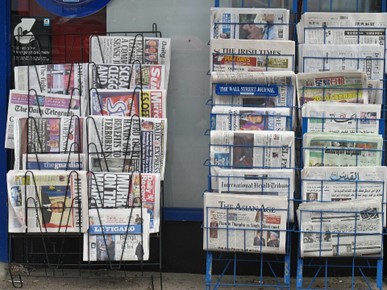
Currently, three companies – DMG Media, News UK and Reach control 90% of newspapers circulated in the UK. Owners/Chairmen, include Jonathan Harmsworth for the Daily Mail, Paul Marshall for the Spectator and GB News, and the Scott Trust as part owners for the Guardian. The BBC is independently owned and is paid for by us, the taxpayer, via the TV licence, helping it achieve its impartial intentions. The fact that just three companies have significant control of news in the UK displays how much media can be controlled by just a significant few. Furthermore, the fact that a limited number of people can have a significant influence on media is important, as controlling media means controlling political narratives. Therefore, they can influence how the UK supports and reacts to different policies.
When looking at the issue of bias and media ownership in the UK, we cannot ignore the rise of Rupert Murdoch and his worldwide media empire. His organisation, News Corp, now run by his son, owns a large and significant portion of media outlets, including the Sun, The Times and the New York Post. Murdoch himself has had several controversies, such as the infamous 2011 phone hacking scandal with his former newspaper, The News of the World. Irrespective of his beliefs, the fact that one man has such a significant holding in the media gives him a tremendous amount of power. This includes having the ability to control narratives of media events and inform the beliefs of his readers, affecting how political events are perceived. Murdoch, before his retirement, was seen as significantly powerful by both British and American politicians and influential in right-wing politics, such as the Republican Party in the US. His ownership of FOX News has actually helped make prominent new voices, who would go on to work in government for Trump, such as Pete Hegseth as Secretary of War in the US by Trump. We should not underestimate the role of media in politics and therefore recognise that what we see in the news, unless impartial, can significantly influence how we see information to fit the desires of a few.
Bias in news has become even more contentious in the age of social media. More than half of UK adults now receive news through social media, making it a significant outlet for news consumption. Studies have shown that platforms like X (owned by Elon Musk) help us explore our political agenda. They can also create echo chambers. An echo chamber is where everything we see on social media reflects our interests and views without seeing other points of view. News that is written with a ‘biased’ perspective can mean that information is selectively told and can alter how news events are perceived. The fact that two outlets can cover one event in two different ways, meaning two readers will understand it differently, massively contributes to political polarisation in society. We need news outlets that tell us information that is written with the intention of being as impartial as possible, such as the BBC and the AP.
The role of news is an essential part of politics in the US and UK. The BBC may have flaws and struggle to always uphold its principles of impartiality, but the fact that it is recognised around the world as a source of information free of political angling is something that we should protect as a vital principle for our society. As we battle through the rise of social media and AI, making the line between truth and fiction blurrier every day, we should learn to value organisations like the BBC as part of our trusted sources.
Edited By: Evangeline Shankland
Image reference: David Hawgood, 2010// CC BY – SA 2.0




Average Rating