 1
1
 0
0
The grooming gang inquiry seems to have been all over the headlines for all the wrong reasons and, with the establishment of a national inquiry, it once again finds itself on the front pages. Throughout the course of this story, a common theme has been the politicisation of the issue, where an abhorrent situation for the women and girls involved has been turned into a political points-scoring contest by those in power and their opposition.
A sad reality is that the investigation into grooming gangs has never really been about the women and girls. As continuously evidenced since its inception, the issue has been turned into a political debate. And now, it is about causing political casualties.
The grooming gangs came to the front of public consciousness in 2012 with the conviction of 9 men in Rochdale, which is regarded as the first high-profile case on localised grooming. The 2022 Jay report pulled the scandal further into the political debate. Despite the report’s 20 recommendations, little impactful change occurred. Jay wrote to the Times newspaper declaring the governments response to the report as “weak”, highlighting language such as “we accept” to be non-committal and inconsequential. She later received a call from the Home Office criticising her remarks, and so the politicisation of the issue begun. The attempt to silence Jay suggests that fear of criticism is considered more important than doing the right thing. By October 2023, the failure to implement changes led to widespread anger. The Conservative government was insistent on reforming the current system, rather than applying any of the necessary recommendations.
The politicisation of the issue reached a zenith earlier this year when calls were made for a national inquiry. This exposed old political debates and renewed political opportunism. Initially Starmer resisted calls for a national inquiry, preferring instead to implement, at last, the Jay report recommendations. Very quickly an adversarial debate emerged. The failures to meaningfully implement any changes became central to the conversation. Labour accused the Tories of doing very little and inevitably the Tories hit back, even going so far as to claim Starmer didn’t want an inquiry as it may expose his failing during his time as Director of Public Prosecutions. The issue at hand was truly lost in attempts at political point-scoring on both sides. Succinctly put by Starmer, it was all just acts of “slinging mud”.
Once again, the adversarial approach in Parliament has overshadowed the issue at hand. The establishment of a national inquiry following the recommendation of the 2025 Casey report could have been the start of cross-party consensus, with a focus on bringing about justice and generating meaningful change and conversation. Instead, it has revealed the gross political opportunism of the two main political parties, and the apparent acceptability of using the sexual exploitation of women and girls to score political points. This view has been evidenced by Jim Gamble, a candidate for the role of Inquiry chair, who has resigned citing political “point-scoring” which had created a “toxic environment” with “adversarial approaches” on social media and in parliamentary debates. The most recent development has been the calls for Jess Phillips to resign from her role as Parliamentary Under-Secretary of State for Safeguarding and Violence Against Women and Girls. A group of survivors have quit the inquiry over Phillips’ handling of the consultation. This follows a conversation involving the Minister about expanding the inquiry to focus on all aspects of child sexual abuse, as well as acknowledging a fear that the issue of race and ethnicity was being diluted. When the conversation became public, her views were seen as indifferent to the victims’ concerns. Phillips in her letter to the chair of Home Affairs select committee seemed to be covering her back from criticism, and in the process contradicted and dismissed the women, who should be at the central to the discussion. This again suggests the moral issue has become secondary, and the women are being used as pawns in the political game.
This all just goes to show that the women and girls have never truly been the focus of these investigations. The focus has been the political parties’ handling of the issue. Political action and inaction have turned it into a political debate, all for the purpose of political point-scoring, with the views of the women affected ignored.
It’s disappointing to see that an issue which is so important and morally charged has been politicised. But is this really a surprise?
Edited By: Evangeline Shankland
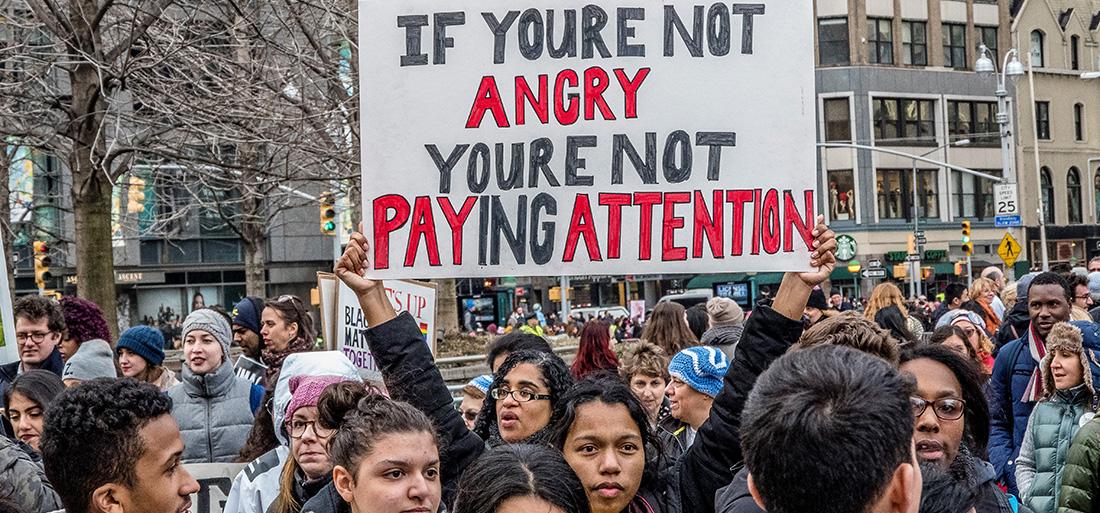
Image reference: Fred Murphy, 2018 // CC BY-ND-NC 1.0




Average Rating