
 5
5
 0
0
In 2024, Trump promised to bury the Republican Party’s discredited neoconservative foreign policy forever, pledging to end the new wars in Ukraine and Gaza that the US had involved itself in. His message was simple and clear, ‘America First’. However, less than a year into his term, it is evident that US foreign policy is more reflective of a revived, rebranded neoconservatism.
On the campaign trail, Trump treated ‘neocon’ as a political slur rather than a coherent doctrine, calling out the Iraq War and other neocon interventionist conflicts as disasters. Trump excused the disorganisation of his own foreign policy during his first term that resulted in continued interventionism (like in Afghanistan) because of Trump’s inexperience which led to poor staffing choices. Now, nation-building, and democracy-promotion are said to bringing a huge financial burden upon America and the outcome of woke globalist policy. Combined, this message helped Trump reconcile the American hard right, which preferred the isolationism and loved anti-neoconservative rhetoric.
The first signs that Trump-style ‘America First’ policy would not mean restraint and isolationism but a revised neoconservatism came from the cabinet appointments following the election. A hushed U-turn commenced when the Trump administration chose neoconservatives for the highest positions within US foreign policy. In these jobs, they would be able to decide what the President would see in relation to foreign policy, dictate the agenda on the ground and influence the President’s policy decision-making. For example, Marco Rubio, Secretary of State promoted US airstrikes against Iranian nuclear facilities, arguing that they were necessary to stop Iran from gaining nuclear weapons. Later, Rubio also helped pushed Trump to intervene, taking on Maduro under the guise of bombing ‘drug cartels’.
For much of early 2025, Trump’s ‘America First’ rhetoric and his policy team’s instincts have co-existed uneasily. The President continued to balance the neocons he appointed to his Cabinet and his voter base. Trump tried to compromise with the neocons with a tough stance towards adversaries, especially with the use of tariffs against China and the escalation of a trade war. But, to appease the base he began talking up ‘quick deals’ to end the war between Ukraine and Russia and to defuse the Israel-Hamas conflict, offering himself as a disruptor who could strong-arm allies and force adversaries to compromise. However, as the crises stacked up, the internal balance of power tilted towards that of the interventionists within the Cabinet.
The clearest example of bellicose interventionism is the US’s policy towards Venezuela. In the name of combating narcotics and toppling a pro-Chinese ally, Washington authorised aggressive military activity around the country. Similarly, US strikes against Iran echoed neoconservative talking points about Iraq, arguing that Iran had the capacity to launch nuclear weapons, and that for the safety of the United States, these needed to be incapacitated. In both these instances, intelligence officials frame these operations as being purely for the sake of deterrence and surgical strikes. In reality, they dress up neoconservative logic in ‘America First’ isolationism, allowing the US to pursue the very interventionism that Trump campaigned against.
To appease his base, Trump has doubled down, trying to have his cake and eat it. By using cartels as an excuse to pursue military operations and enact neoconservative regime-change in Venezuela, Trump frames these sorts of operations as being essential to tackle the opioid crisis at home, ignoring the fact that the vast majority of opioids come in through Mexico. Thus, he can claim that neoconservative foreign policy is a actually a domestic issue that puts ‘America First’.
However, that this approach isn’t convincing his base. There is increasing pressure within the party and growing fractures between its internal factions. Individuals such as Tucker Carlson, an important bellwether for the party’s youth and direction, have consistently and ferociously criticised the President’s new approach to foreign policy, arguing that it has become a breach of the original ‘America First’ promise. This argument seems to echo the concerns of the base, leading to a gradual haemorrhaging of support for his foreign policy expeditions. A whopping 70% of all voters oppose US military action against Venezuela, and only around 40% of Americans approve of Trump’s foreign policy, with the latter approval rating continuing to drop.
It is clear now that the President doesn’t have many options left to ensure his continued popularity and a Republican win in 2028. Either the base must be convinced by the President’s arguments (very unlikely considering his foreign policy approval rating has been dropping for months), or the President begins to ignore his Cabinet’s concerns and starts pursuing ‘America First’ policies in line with the wishes of the base. Even worse, foreign policy, and especially the Israel-Hamas war, has consistently ranked as one of the top five most important issues for voters nationally and is especially important for younger voters, forcing Trump to address this issue or face the electoral fallout before the 2026 midterms.
For now, the policy machine hums to a familiar neoconservative tune. Sanctions proliferate, covert tools expand, and the United States intervenes militarily to stop ‘terror regimes’ in the Middle East. Decisions are again shaped by advisors whose careers were made in the heyday of neoconservative influence.
Edited by Phineas Horan
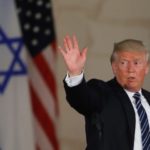
Image: US-Präsident Donald Trump könnte Hardliner Marco Rubio zu seinem Außenminister machen // CC BY 4.0.




Average Rating