 0
0
 0
0
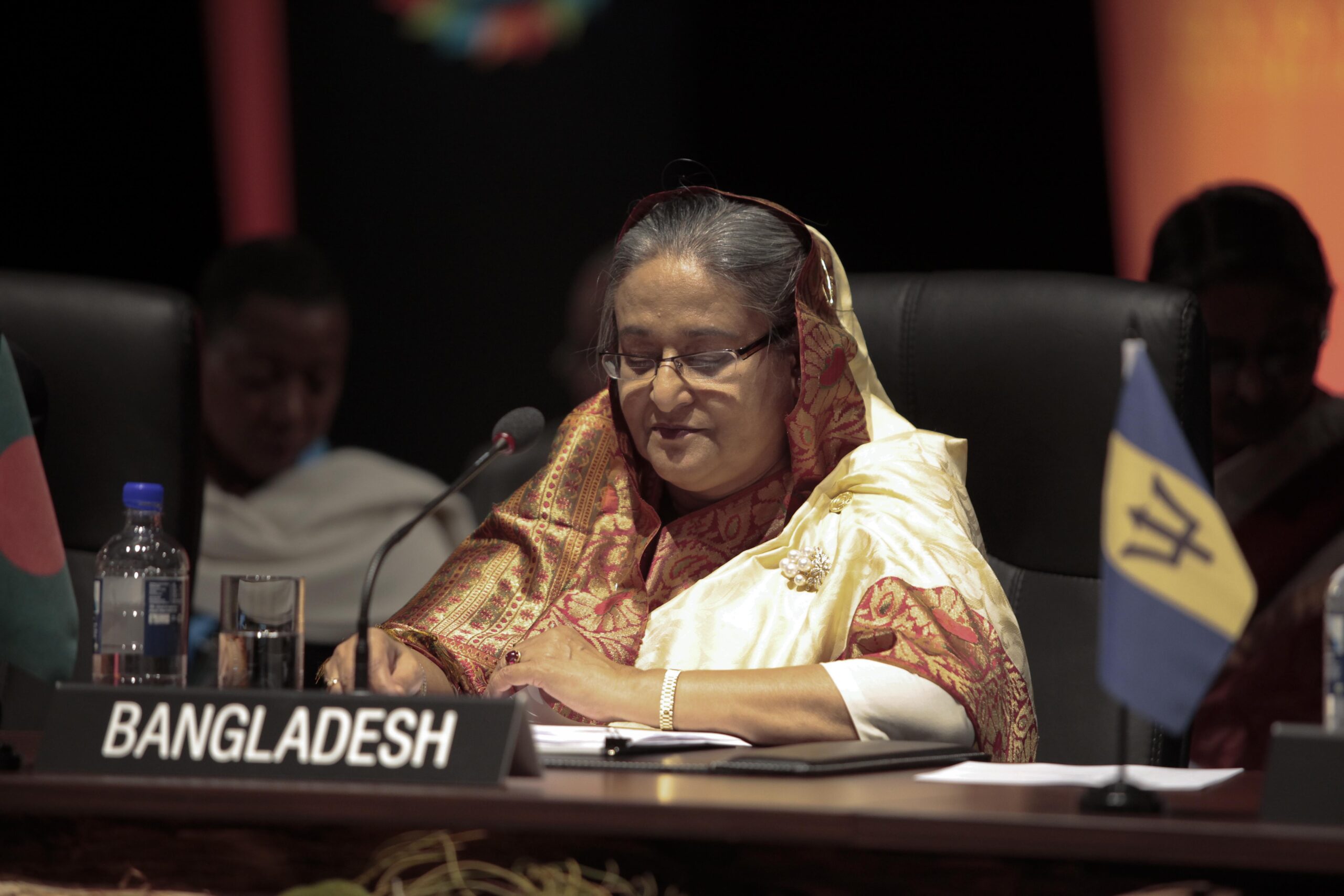
Sheikh Hasina is a Bangladeshi politician; she served as prime minister of Bangladesh from 1996 to 2001 and from 2009 to 2024. As of November 2025, Hasina has been sentenced to death in absentia for crimes against humanity over her government’s brutal crackdown on student protests.
Born on 28th September 1947, Hasina is the daughter of Sheikh Mujibur Rahman, the founding president of Bangladesh. Hasina didn’t become involved in politics until 1975, when a military coup assassinated her father and most of her family. His assassination was after many years of political tensions, culminating from the 1971 Bangladesh Independence War.
After her father’s assassination, she joined the now-banned political party, the Awami League. While in exile in India, she continued to support the party rooted in secularism and Bengali nationalism. Despite being abroad, she was elected president of the Awami League in 1981 and returned to Bangladesh.
Bangladesh gained sovereignty in December 1971, after a brief but bloody war between Bangladeshi nationalist forces supported by India and Pakistan. Political tensions bubbled over when Sheikh Mujibur Rahman, Sheikh Hasina’s father, was victorious in Pakistani elections. Rahman was a strong supporter of freedom for East Pakistan (now Bangladesh). The West Pakistani government was not happy with this outcome, and the Pakistani army was deployed to East Pakistan. The conflict was between the Pakistani military and the Mukti Bahini, a Bangladeshi independence militia. However, India also had a role to play, backing the Bangladesh militia and sending troops to East Pakistan after 15 million refugees crossed into India. The fighting lasted two weeks, with Pakistan surrendering and Bangladesh gaining independence. From 1975 to 1990, military rulers frequently dissolved parliament and imposed martial law, leaving Bangladesh’s democratic institutions fragile.
Hasina became prime minister in 1996 and completed a full five-year term, the first to do so since Bangladeshi independence. Her government ended the long-running insurgency in the Chittagong Hill Tracts, a peace deal that earned her the UNESCO Peace Prize, and introduced economic reforms that lifted GDP growth to 5.5%. However, this political success did not last long. The early 2000s were governed by instability and violence. With protests and strikes occurring often, Hasina ended up being arrested on charges of extortion and, later, murder. After being released on parole, Hasina commanded a parliamentary majority and remained prime minister for 15 years. On multiple occasions, Hasina was accused of rigged elections, suppressing dissent and “politically motivated arrests”.
The crisis that ultimately toppled Hasina began as a student-led protest against the government job quota system. Demonstrations quickly escalated into a broader anti-government movement, fuelled by frustration over Hasina’s fourth consecutive election victory, a result many believed lacked legitimacy. The government’s response was violent. Demonstrators were targeted with open fire by the police. According to reports, government forces were “shooting at point-blank range at some protestors, the deliberate maiming of others, arbitrary arrests and torture”.
On the 5th of August alone, 52 people were killed. Facing a nationwide uproar that was rapidly spiralling out of control, Hasina resigned and fled the country. The International Crimes Tribunal in Dhaka, initially established by Hasina’s government to investigate atrocities committed during the 1971 liberation war, took up cases related to the 2024 crackdown. In November 2025, the tribunal found Hasina guilty of crimes against humanity, citing unlawful killings, widespread brutality, and systematic repression of civilian protestors. She was sentenced to death in a trial held in absentia.
Hasina, speaking from exile, has dismissed the charges as “politically motivated” and “biased,” arguing that her opponents are using the tribunal to rewrite the narrative of her final months in office.
This leaves Bangladesh in yet another state of political uncertainty and turmoil.
Edited by Rida Ali
Image: 28 October 2011 – CHOGM, Commonwealth Leaders today at the Perth Convention and Entertainment Centre host to CHOGM, Perth Western Australia.©Annaliese McDonough/Commonwealth Sectratariat.//CC BY-NC-ND 2.0





While it holds that she should be held accountable for the crimes she’s committed, is being sentenced to death really the thing? Like, there are “men” who are also very much committing crimes against humanity, but some of them aren’t even on trial, and none of them are sentenced to death. While political motivation can be a factor, is this decision also a reflection of gendered difference?