 0
0
 0
0
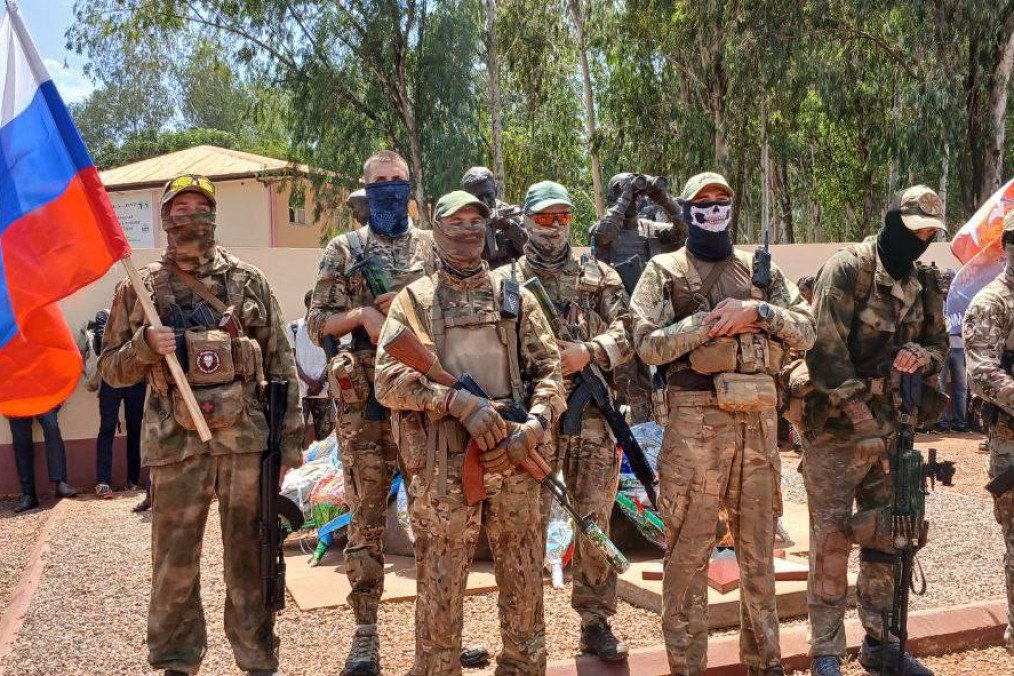
The Africa Corps are back on tour! One might plausibly mistake this for Rommel’s infamous North Africa Campaign; however, this tribute act is instead a Kremlin-backed private military corporation. The African continent has endured as a playground for great power competition for centuries and Russia is no exception. It’s use of Private Military Corporations are a carefully constructed tool of Moscow’s foreign policy.
Since 2017, Russian mercenaries have conducted operations ranging from security details to political consulting for political groups in thirteen countries in Africa. Their work is funded by and carried out for Moscow as it seeks to gain access to strategic resources, fund its war machine in Ukraine, bypass western sanctions, cultivate allies in international forums and open a new avenue for great power competition all of which the west will have to respond to.
However, this surge in activity is not a new strategy for Moscow but rather a revitalisation of previous Soviet influence in Africa. In the Cold War, the USSR had great influence in regimes throughout Africa. Most notably, Nasser’s Egypt which was supported militarily and used for smuggling arms into Algeria. Moreover, the soviets provided arms and military training to Angola and Mozambique, the latter of which depicts the infamous Kalashnikov rifle on its national flag – a testament to the influence the Soviets had on the Mozambican War of Independence. In return for these ventures, Moscow got access to friendly ports for the Soviet fleet and undermined American influence in the continent.
From 2017 to 2023, the Wagner group, led by Yevgeny Prigozhin was the main PMC employed by the Kremlin. Their semi-autonomous structure worked as a nimble, expeditionary force that could operate with sufficient flexibility to serve their own goals. It enabled the Russian government to stand clear of any international outcry from the numerous human rights abuses linked to the PMC, yet Prigozhin’s longstanding close relationship with Putin meant that their interests often overlapped, allowing Moscow to expand its own influence in the region.
A clear example of how these groups function is found in during the Malian Civil War. Mali had experienced a coup de état that led to a military junta led by Assimi Goïta in 2021. The previously democratic regime severed ties with western partners, particularly its previous colonial ruler, France, who had provided vital counter-insurgency interventions in the Sahel under Operation Barkhane. More interestingly, two key leaders in the Malian military were receiving training in Russia and had arrived back in Mali just days before the coup. By December 2021, Wagner had boots on the ground in Mali, to provide security services to the Goïta regime. Military camps north of Modibo Keita International Airport were seen to be rapidly expanding to accommodate permanent structures and increased logistics capabilities, highlighting the long-term intention for Russian mercenaries to remain in the country. Additional construction work even expanded after Prigozhin’s mutiny revealing the Mali-Russian relationship had transcended the private sector.
Much like the East India company, Russian statecraft uses the private sector at the front of its relations. It is not uncommon for mercenary contracts to be awarded in exchange for Russian shell companies to gain privileged control of African mines. In Sudan, Mali and the Central African Republic, Gold is smuggled via the UAE back to Russia, generating billions a year to fund the war in Ukraine. In the Central African Republic’s (CAR) Vakaga prefecture, local miners revolted after contracts were transferred to Wagner, who in turn used violence to supress the revolt leaving dozens dead in the process. Aside from mining, narcotic smuggling and human trafficking are also revenue streams Russia employs in Africa to undermine Western sanctions.
In 2023, the structure of these relationships changed. Following the death of Prigozhin in a plane crash, that occurred coincidentally just after his coup attempt on Moscow, Putin quickly reassured his African partners that support would continue; demonstrating how important these relations are to Moscow. The Wagner replacement, the Africa Corps is a paramilitary group directly under the authority of the Russian Ministry of Defence and supported by the GRU, Russian military intelligence, which means Moscow now has greater control of its influence in Africa. Yet, since many of the Africa Corps personnel are ex-Wagner, atrocities on civilian populations remains unchanged.
This growing cultivation of interstate relations is further evidenced by the Russia-Africa summits in which during the 2019 Russia–Africa Summit in Sochi, all 54 African states sent delegations with 43 heads of state attending. Russian trade is dwarfed by other great powers such as China who has 10 times the trade flows to Africa yet, at the summit Putin emphasised a niche role for Russia – providing support for state sovereignty to African states. 40% of arms sales to Africa are Russian with the proportions being far higher to countries that also host Russian PMCs.
This bid to formalise relations with Africa is part of Russia’s strategy garner support on the world stage. Clear evidence is found in the voting behaviour during the emergency session of the UN regarding the Russo-Ukraine war. African countries containing strong Russian presence have consistently voted either against or abstained. Moreover, Africa makes up 28% of the UNGA and in 2019, China’s Qu Dongyu won the presidency of the FAO, with significant endorsement from the G77 and Russia. In 2022, amid the Ukraine Grain Crisis, diplomats strongly criticised Qu for insisting on a neutral stance and resisting pressure from the West to condemn Russian actions as the cause of the crisis. This neutrality ultimately hindered relief efforts and undermined attempts to coordinate any unified diplomatic pressure on Russia.
The most significant issue of all is that this growing influence in Africa opens a new sphere of influence the west will have to compete in. By cutting aid spending it only widens the gap in capacity for building relationships in Africa. China’s Belt and Road Initiative and Russia’s paramilitary operations have both charmed the leaders of Africa. Africa is home to some of the fastest growing populations and most critical natural resources and the great powers that will be able to make use of them will have a strong foundation for this century.
Edited by Elizabeth Pinkney
Photo: Wagner mercenaries in the Central African Republic. Photo open source.



Average Rating