 2
2
 0
0
Fashion is one the largest industries on the planet, employing more than 1.8 million people in the US alone before COVID19. The role that fashion plays in politics is undeniable. From the controversy around President Obama’s tan suit to the 2018 Golden Globes blackout that brought light to the #MeToo movement, fashion is a reflection of the times we are in, characterising the society, culture, and era in which it resides. Hence, as Andrew Bolton notes, “[fashion is] inherently political”.
The late Virgin Abloh, fashion designer and founder of Off-White, explained that “politics isn’t binary. There’s the politics on your phone and the politics on your street. And, yeah, there’s the politics of your clothes”. His 2017 show was about raising awareness, inspired by “this idea that borders are so heavily guarded that people are dying just to try to get frss om one to another”. The beauty of fashion is that it is an outlet. When political arenas fail we can use fashion as a political expression for voices that are often not represented. Similarly to Virgil Abloh, Dr Samuel Ross says through his work he is “trying to capture an experience”.
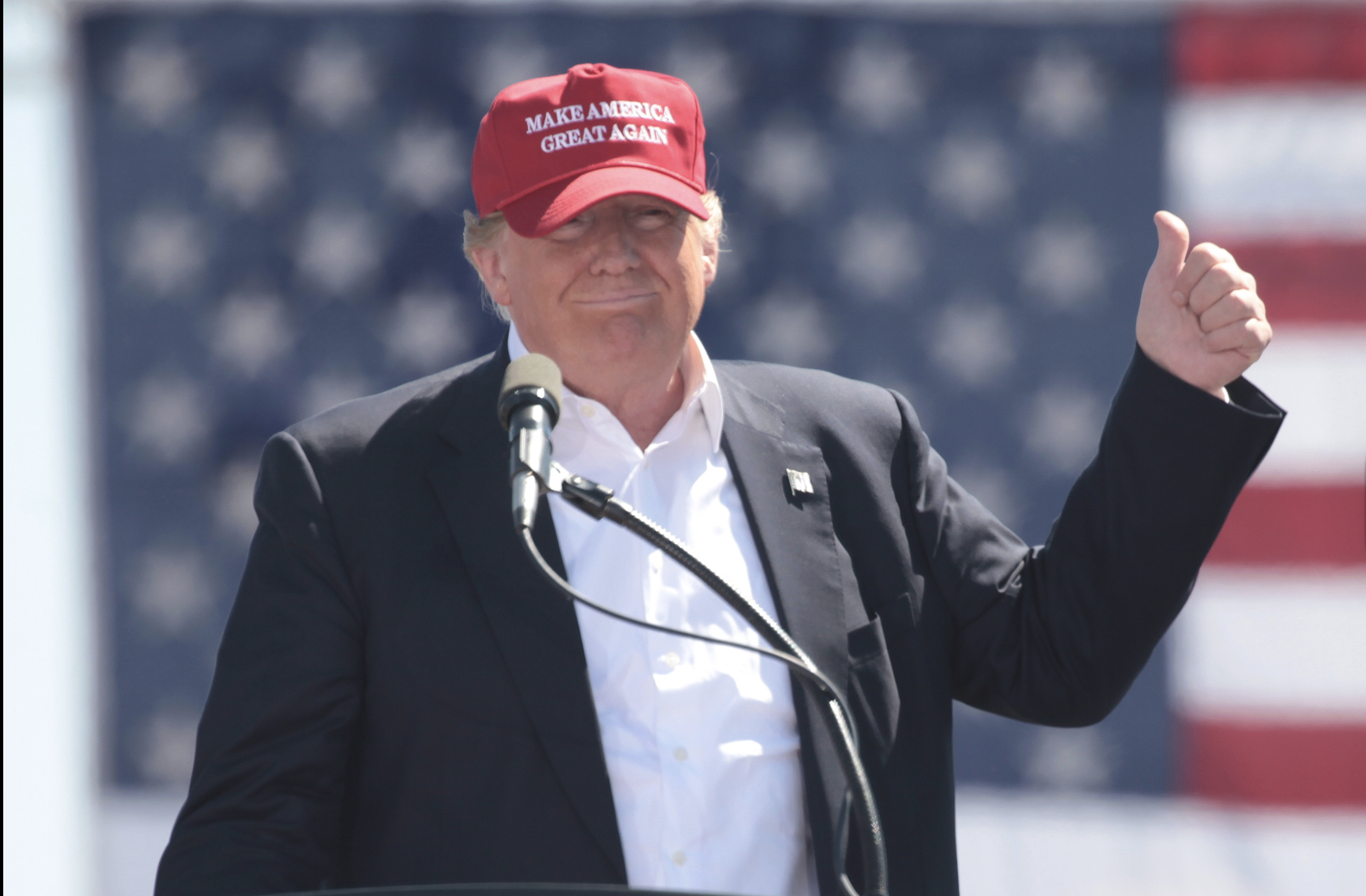
Look at how Donald Trump used fashion to promote his political agenda. The MAGA hat, “Make America Great Again”, which was popularised and sported by Trump supporters helped spread his political campaign across America. Fashion brands have also been involved in politics by pouring in donations to political parties during the presidential campaigns. According to Federal Election Commission data, Vera Wang, Michael Kors, and Tory Burch were the largest individual political donors in the fashion industry during the 2023–24 cycle, with substantial contributions going to Democratic candidates.
The deep-rooted relationship between fashion and politics has been highlighted by the Israeli genocide in Gaza. Zara’s controversial ad which displayed mannequins missing limbs and wrapped in white shrouds was criticised for resembling Palestinians victims of the Gaza War. There were many calls to boycott Zara, building on similar calls that arose in 2022 after a franchise owner of a Zara store hosted an event for Itamar Ben-Gvir, a far-right Israeli politician.
Fashion and politics are inextricably linked, used to support political ambitions, express political opinions, and even as a form of political accountability.
Image: Gage Skidmore, ‘Donald Trump speaking with supporters at a campaign rally at Fountain Park in Fountain Hills, Arizona‘, 2016 // CC BY-SA 2.0






Average Rating