 0
0
 0
0
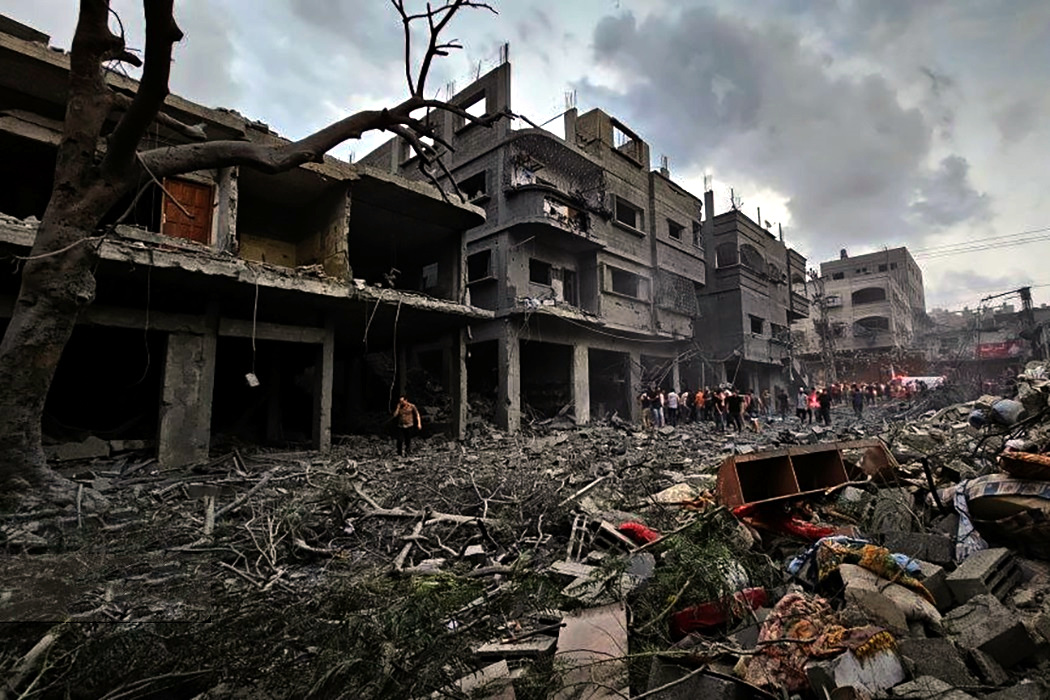
At the World Economic Forum held in Davos in January, President Trump outlined the plans for “New Gaza”. The plans focused on the rebuilding of infrastructure in Gaza; a necessary step considering the destruction. Over the 2 years of conflict, Israel damaged 81% of buildings in the strip as well as all essential services and infrastructure, creating 68 million tonnes of rubble in the process. But the so called “master plan” isn’t focused on the rehousing of Palestinian homes and reestablishment of livelihoods. In fact, it’s not really about the Palestinians at all. The plan’s aim is to turn Gaza into a Dubai-style development. The maps show Gaza as being split into zones based on function. There are areas designed specifically with coastal tourism in mind, as well as a plethora of skyscrapers, residential areas and empty strips of land along the Egyptian and Israeli borders as part of a security perimeter.
This all seems outlandish considering the images of devastation that have flooded the media since October 7th 2023. And you need to look no further than the language used by Trump and his allies to see that the focus is misplaced. At Davos, Trump stated that “it’s all about location” and that it’s a “beautiful piece of property”. Whilst his son-in-law, Kushner declared the peace efforts to be “very entrepreneurial”. Not only are the statements completely ignorant of the situation, but also clearly detract from the significant humanitarian issue at hand. And so, the US President and his team depicts the problem in Gaza as one of a lack of property, rather than as a humanitarian crisis. This detracts from the central issues of the conflict and from the foundations of securing a long-term peace programme, such as accountability and governance.
As noted by Haddad and Mansour, Trump’s plans ignore the fact that this reconstruction would require the total eradication of the current urban style and social fabric of Gaza, thus marking a change in identity. This also means that the immediate and long-term needs of the people of Gaza are ignored. . Many fear this plan is a renewed continuation of Israel’s policy of forced displacement. This fear was compounded by Trump’s comments in early 2025; Palestinians would be resettled in neighbouring countries with no right to return. In other words, the reconstruction of Gaza is a means to take over the land, with little recognition of the property and land rights of Palestinians. Moreover, there is a dire humanitarian situation in Gaza, and there has been for a long time. For example, the prevalence of malnutrition and communicable diseases, as well as problems of getting aid in. Estimates of total fatalities since October 2023 reach 71,667, according to the Palestinian Ministry of Health and recognised by the Israeli military. Simply hoping that reconstruction will fix these problems isn’t enough. The significant disinterest in the plans in addressing the plight of the Palestinians has been compounded by the lack of consultation with any Palestinian body, in regard to reconstruction. Thus, claims have been circling that the plan merely plays into Netanyahu’s hands. And that the destruction of Gaza has simply become an opportunity for outsiders to profit from the war, whilst the Palestinian people continue to suffer.
Therefore, the plans for “New Gaza” in their current form ignore many issues central to the conflict and, in turn, any attempts at achieving a lasting and sustainable peace.
Edited by: Evangeline Shankland
Image: Saleh Najm and Anas Sharif, 2023 // CC BY 4.0






Average Rating