 6
6
 0
0
After more than a decade of self-rule, the Democratic Autonomous Administration in North and East Syria, commonly known as Rojava, has been brought to an end. This follows a decisive intervention by the Syrian government, which has reasserted control over large swathes of territory previously administered by the Kurdish-led Syrian Democratic Forces (SDF). The SDF, which until recently operated with US backing, was instrumental in the military defeat of ISIS in Syria.
An agreement with Damascus has resulted in the integration of Kurdish military and civilian institutions into the Syrian state. While many, particularly Arab communities, have celebrated this decision as a step towards national unification, it has raised serious questions about the future of the Kurdish community amid ongoing sectarian violence.
From Negotiation to Collapse
Following months of stalled talks between the newly formed Syrian government, led by Mohammed al-Sharaa, whose Islamist militant group Hayat Tahrir al-Sham (HTS) had deposed the Bashar al-Assad regime, negotiations over the integration of SDF forces and governing bodies reached an impasse. The SDF rejected these demands in an effort to preserve Kurdish regional autonomy.
However, in January the Syrian government launched a rapid offensive that pushed the SDF to the brink of collapse, despite its previous control over nearly a third of the country’s territory. Crucially, Arab tribal units broke away from the SDF, leading to the loss of key population centres, including Raqqa, the former de facto capital of ISIS captured by the SDF in 2017. More significantly, the territories lost include Syria’s largest oil fields, seen as a vital revenue source for a country struggling to rebuild after years of civil war. Facing defeat, Kurdish forces first agreed to a ceasefire and then reached an agreement with Damascus that saw the integration of SDF members into the Syrian army and the transfer of prisons and energy infrastructure to state control.
Beyond the Betrayal Narrative
Much of the Western media has framed recent events as a betrayal of the Kurdish people by the United States, pointing to Washington’s reliance on Kurdish forces in the fight against ISIS and to Rojava’s reputation as a democratic project in an otherwise authoritarian region. While emotionally compelling, this narrative flattens the reality on the ground and, according to some accounts, shifts blame away from the SDF’s own increasingly repressive practices.
Politically, Rojava was committed to a multiethnic and autonomous system that rejected the ethnic sectarianism long embedded in Syrian politics. In practice, however, the SDF became progressively more repressive toward those perceived as sympathetic to the new government in Damascus, increasing arrests over the past year. It is therefore unsurprising that many Arab communities under SDF control, particularly those who welcomed the emergence of a Sunni Arab-led government, aligned themselves with government forces.
The Reaction from the US and Türkiye
U.S. troops worked closely with the SDF for years, though the relationship resembled an alliance of convenience rather than genuine support for Kurdish autonomy. In October 2019, with ISIS no longer seen as an immediate threat, the Trump administration announced the withdrawal of American forces from Syria. Although the withdrawal was ultimately postponed, it underscored a shift in US priorities, with Washington increasingly focused on the Pacific theatre.
With Assad gone, the United States moved to cooperate with al-Sharaa’s government, lifting sanctions and welcoming Syria into an international anti–Islamic State coalition. U.S. support for the SDF was always complicated by its NATO ally Türkiye, which considers the People’s Defence Units (YPG), the core component of the SDF, an extension of the outlawed Kurdistan Workers’ Party (PKK). The PKK has waged an insurgency against the Turkish state since 1984 before agreeing to dissolve itself in early 2025. Ankara will therefore welcome the collapse of Rojava.
Kurdish Rights
As part of the deal, Sharaa issued a decree recognising Kurdish rights, including making Kurdish a national language, granting nationality to stateless Kurds, and declaring the Kurdish New Year a national holiday. Many analysts, however, have dismissed these measures as a political tactic, arguing that had similar guarantees been offered earlier, the confrontation between the two sides might have been avoided altogether. Kurdish scepticism is reinforced by the sectarian violence that has marked Syria in 2025, when government-aligned forces killed nearly 1,500 Alawites in western Syria and hundreds of Druze were killed in the south.
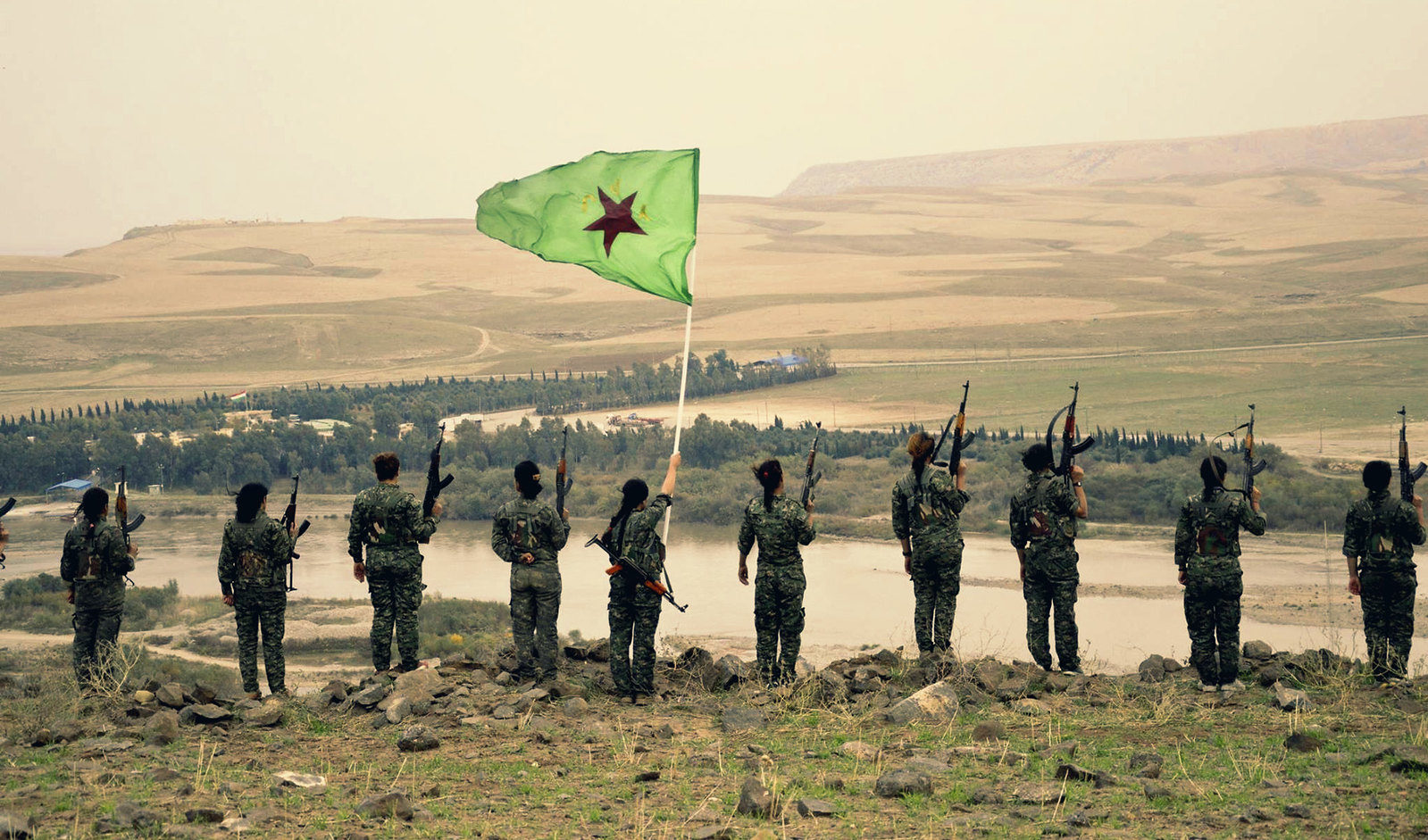
Another major sticking point concerns women’s rights. Jin, jiyan, azadi (“women, life, freedom”) sits at the heart of the Rojava project. For years, feminist movements have praised the administration as a bulwark against authoritarianism, particularly for its commitment to gender parity, with every institution it established based on power-sharing between men and women. Kurdish women also played a central role in the fight against ISIS, with an estimated 12,000 currently serving within the SDF.
Serious concerns now surround their fate and whether they will be allowed to integrate into the Syrian armed forces. According to sources in Damascus, when asked about the issue, Foreign Minister al-Shaibani responded that female fighters could return to being mothers and wives.
Edited by Ruby Fry
Image: YPJ, by Jakob Reimann , 2017 //CC BY 2.0




Average Rating