 1
1
 0
0
Chinese warships maneuvered near Taiwan on the 29th December as part of a large-scale People’s Republic of China military exercise officially codenamed ‘Justice Mission 2025’. For many, this was quickly labelled as a routine exercise, and it faded from headlines. However, with the current political landscape and a few differences from previous Chinese drills, this action did raise concerns. As Beijing steps up diplomatic engagement with Western governments, the December exercises now appear less as an isolated show of force and more as part of a broader strategy that blends military pressure with global diplomacy.
The exercise involved Chinese naval and air forces operating close to Taiwan but differed from previous drills in both scale and coordination. It involved joint operations by multiple PLA services, including army, navy, air force, and rocket force, working together across several zones encircling the island. Analysts describe the activity as one of the broadest and closest rings to demonstrate military capability China has conducted around Taiwan. It also included simulated blockade maneuvers targeting key ports such as Keelung and Kaohsiung.
These actions were not conducted in a political vacuum. The drills were carried out following a record US$11 Billion arms sale to Taiwan and accompanied by unusually explicitly messaging from Beijing. PLA rhetoric explicitly framed the exercise as a means of deterring both Taiwan independence and “external interference” which could be considered more overt than in some earlier drills the military messaging from China did link the exercise to outside actions. While no confrontation followed, the exercise tested high tempo, multi domain operations around the islands full perimeter signaling an escalation in how China is willing to approach sensitive maritime areas.
Taiwanese authorities responded cautiously, avoiding inflammatory rhetoric, emphasising preparedness rather than provocation. This restraint has become a consistent feature of Taiwan’s approach, as they highlight the importance of careful signaling for survival. Restraint has become a calculated form of defence. However, the normalisation of this kind of military pressure raises questions. Repeated drills blur the line between deterrence and threat, increasing the risk of triggering a crisis. What is described as routine today may create conditions in which escalation becomes inevitable.
Alongside this, China’s diplomatic posture tells a different story. This month, China has engaged in high level talks with western governments aimed at improving economic cooperation and stabilising political relations. For example, Kier Starmer met President Xi Jinping for talks on trade, investment, and national security. These diplomatic efforts suggest a desire to project reliability and openness globally.
The contrast between military pressure near Taiwan and diplomatic outreach abroad reflects a deliberate strategy of strategic ambiguity. By asserting strength in its immediate region while pursuing cooperation elsewhere, Beijing keeps rivals and partners uncertain. While from an outsider’s perspective it may seem contradictory, for Beijing this is a pragmatic balancing of national interests safeguarding what it sees as its own sovereignty while sustaining economic influence abroad.
For Western governments, this strategy creates an increasingly complex dilemma. Many rely heavily on economic ties with China particularly when it comes to trade and investment. For example it is the UK’s third largest trading partner supporting over 370,000 British jobs.Yet security concerns surrounding Taiwan remain unresolved, making the separation of economic engagement from security considerations more and more of a gargantuan task especially as China’s military posture near Taiwan persists.
The consequences of this extend far beyond diplomacy with Taiwan playing a central role in the global technology sector, particularly in the production of advanced semiconductors. Instability in the Taiwan Strait would disrupt global supply chains having significant economic implications worldwide.
Although the December drills concluded without incident, they expose a deeper challenge for the international community. Can sustained military pressure coexist with meaningful diplomatic engagement? How long can strategic ambiguity preserve stability rather than undermine it? As China’s influence continues to increase, the answers to these questions will shape not only the future of Taiwan but the broader international order.
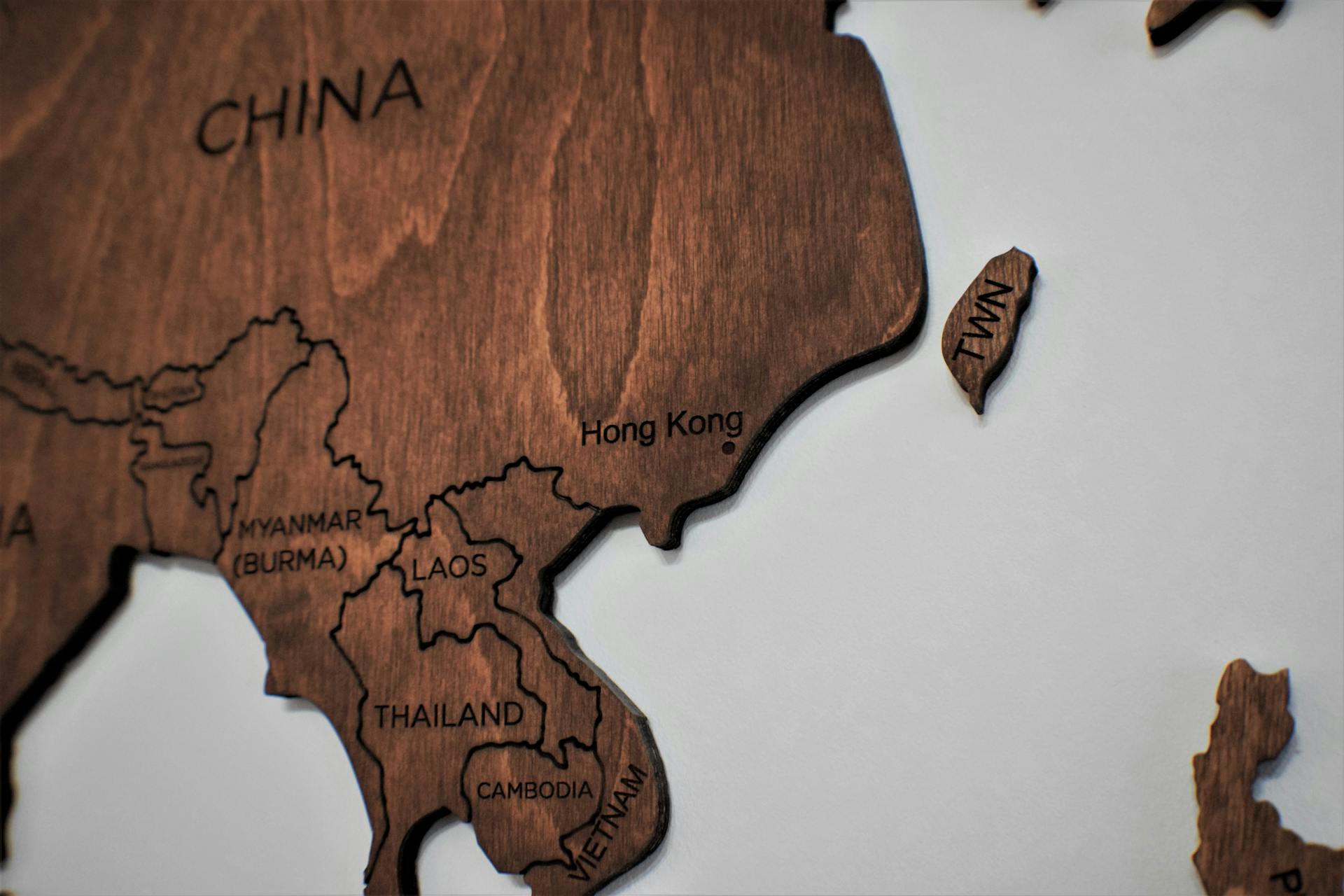
Image: Wood Carving Map of China and Nearby Countries by Beck, 2020 // Public Domain




Average Rating