 1
1
 0
0
Over the course of the 21st Century, countries across Africa have experienced a serious democratic backslide. Uganda, Rwanda, Cameroon, Equatorial Guinea, Gabon, Mali, Burkina Faso and Niger all exist under either authoritarianism or military leadership. The majority of leaders have remained in power by evading term limits or via a coup, which I will expand on further below. Although coups in Africa are not a recent phenomenon, with the continent accounting for 214 of the 486 military coup attempts and successes since 1950, it is the prevalence of coups since 2020 that has largely gone ignored. Human rights violations are being similarly overlooked.
The three main factors that can be blamed for the rise of authoritarianism in Africa are:
The Abuse of Insecurities: Many African countries have been subject to armed conflict at the hands of terrorist groups, have suffered with food insecurity, and have seen rates of unemployment grow hugely. In these moments of crisis, authoritarian powers have found opportunities to assume power via coups, claiming they are acting as a response to terrorism and to a fragile state. Assertions like these were made in Mali, Niger, and Burkina Faso to justify these powers rise to control.
Evading and changing term limits: Constitutional restrictions are a barrier to seizing full power in countries. Efforts to amend constitutions are allowing authoritarian powers to retain their control, as in Zimbabwe, where the ZANU-PF party is in the process of amending the country’s constitution to allow President Emmerson Mnangagwa to serve a third five-year term despite his promise to retire. The growing trend to amend the constitution to extend their presidency speaks to the level of corruption and democratic backsliding in Africa that flows unchecked by international organisations.
Colonialism: This is probably the most prominent underlying cause of authoritarianism in Africa. Post-colonial states inherit weak and unstable governments and economies, and are unable to crush this imperial legacy of insecurity, so continue to face political instability. Characteristics found in these governments, like election rigging, can be dated back to their colonial roots, thus it is no surprise that Africa turns back to authoritarian ways when it has never known true democracy. Colonialisation stunted Africa’s political evolution, making it difficult for the continent to step away from its history of exploitation.
The real question is: how has the rest of the world responded to the rise of authoritarianism in Africa? We know from the past that the West will never interfere unless these authoritarian regimes threaten their interest. NATO’s intervention in Libya was justified to “protect civilians”, although many argue it was also implementing regime change. Populist Donald Trump’s election to President of the US and his America First agenda all but guarantees that the leader of the liberal international order will not be stepping in to protect citizens of these regimes any time soon. The debate over whether America itself is headed for this style of leadership makes it even more unlikely that the country get involved. Just like many crises in Africa, such as the genocide in Sudan and terrorist attacks across West Africa, the democratic backsliding continues to be ignored.
Edited by Isabel Whitburn
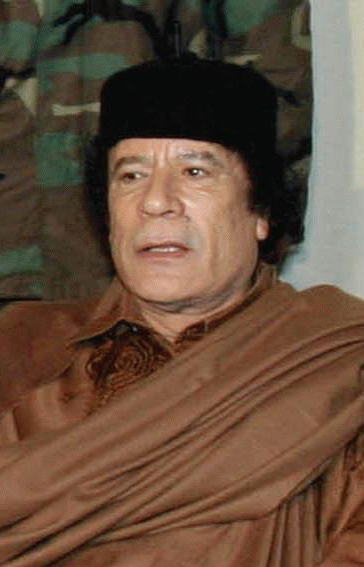
Image: Agencia Brasil, ‘The leader de facto of Libya, Muammar al-Gaddafi’, 2003 // CC BY 3.0 BR






Average Rating