 0
0
 0
0
The return of regional proxy conflicts in the past decade has exposed one of the colonial period’s most consequential failures: the unfulfilled promises of self-determination. Across a Middle East continuously shaped by arbitrarily drawn borders and broken mandates, stateless people remain uniquely exposed to its consequences. The Kurdish population – denied statehood by regional and imperial settlements – now find that renewed geopolitical competition has not brought security, but a renewed cycle of violence and dispossession.
The scale of statelessness is staggering. Over 15 million people are entirely without a nationality, tens of millions more stand on the precipice of losing theirs, and hundreds of millions experience a second-class existence because of it. Statelessness is not geographically remote either, scholars routinely classify the Welsh, Scottish, Breton and Catalan people as stateless nations. These populations share is a claim of sovereignty over their ‘homeland’, difference to their neighbours, and the perception that their present status amounts to occupation. Colonialism is still rampant in a world where actively colonial nation-states are mistaken for ‘postcolonial’ states. The threat that this reality poses on stateless people has been exacerbated by the resurgence of authoritarian regimes.
Contemporary authoritarian regimes, which are increasingly attracted to absolute control and homogenisation, have triggered a uniquely perilous phase for stateless nations. Whereas earlier methods of domination permitted certain political negotiations, democratic backsliding has hollowed this out. An overt rejection of democratic norms and authoritarian consolidation has rendered electoral competition an insufficient vehicle for minority rights. Stateless nations are now confronted not only with suppression, but with enforced silence that simultaneously provokes and delegitimises resistance.
The remaining barriers against minority subordination are also at the cusp of extinction. Countless violations of international law at the hands of supposedly democratic states such as Israel and the United States have dealt a blow to the institutional legitimacy upon which international law depends. When these states resort to unlawful occupation, collective punishment of civilian populations and the obstruction of UN mechanisms, they expose the profound contradictions within that order. The consequences for the stateless are particularly devastating. Unlike recognised states, they have no ability to invoke legal protections or to demand accountability. International law was never equipped with the ability to safeguard the stateless, and the accelerating willingness of powerful actors to violate it has rendered what modest protections existed obsolete.
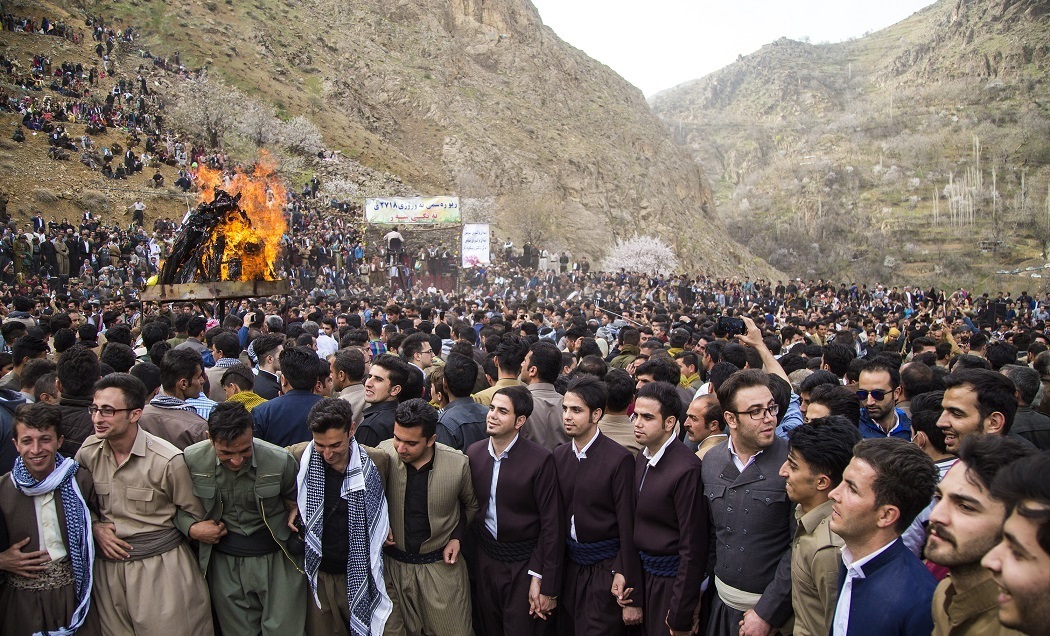
In the case of the Kurdish population, an estimated 40 million people, the ongoing US/Israeli-Iran war seems to be another example of the historic violation by the hands of colonial powers. With its supposed goal of regime change in Iran, the United States is urging Iranian Kurds to lead an armed resistance. However, this move by the US exposes a continuous attitude towards the Kurdish. During the First World War, the Allies promised them independence in return for a Kurdish armed rebellion against the Ottoman Empire. However, like the Assyrians, Arabs and Armenians, this promise was violated. Rather by the latter half of the twentieth century and beyond, the Kurds were given a new role. Not independence or self-rule, but as fighters under the supposition that they were military pawns in the Middle East. , the Kurds were urged by the U.S. to lead armed uprisings against both Iran from 1974 to 1975 and Iraq in 1991. On both occasions, when the U.S. saw fit, support for the Kurds was withdrawn and the Kurds were abandoned to face displacement, hunger, disease and death at the hand of the Iraqi and Iranian regimes.
Now, this pattern is manifesting itself again. Without preventative measures to safeguard the livelihoods and rights of the Kurdish, the colonial powers may use them as they see fit. The Kurds face further persecution in Syria with the dissolution of the Rojava territory into the new regime. Once a new opportunity to establish a democratic state with equal rights for men and women, the autonomy of the Kurdish in Syria may soon disappear again.
The violation of the Kurdish is not a unique phenomenon. Numerous stateless populations across the world face persecution under the actions of colonial and authoritarian powers. The Palestinians, Uyghurs, Rohingyas, Tibetans and the Baloch all face similar circumstances. The absence of sovereign standing leaves stateless groups structurally excluded from the protections international law nominally provides. As a result, these populations are most vulnerable to the rapidly increasing civilian deaths in conflict-affected countries, amassing to more than 36,000 in 2024. Stateless populations face a bleak future. Off the back of democratic backsliding, colonial legacies and contemporary authoritarian regimes, their livelihoods risk being disrespected more than ever before.
Edited by Phineas Horan
Image: Iranian Kurdish people celebrating Nowruz 2018, Tangi Sar village//CC BY 4.0






Average Rating