 0
0
 0
0
In a show of solidarity, a group of right-wing leaders, including Giorgia Meloni, Benjamin Netanyahu, and Javier Milei, appeared last month in a campaign video endorsing Hungary’s Prime Minister Viktor Orbán, with Donald Trump later following suit.
Despite this international backing, Orbán, the longest-serving leader in the EU, faces his toughest election since coming to power in 2010, with his party, Fidesz, currently trailing the burgeoning Tisza Party. Set for April, the election promises to be the most consequential in Europe this year, with far-reaching implications for issues ranging from Ukraine to LGBTQ+ rights.
Democratic Backsliding in Practice
Having secured four consecutive electoral victories, alongside an earlier stint in the late 1990s and early 2000s, Orbán has emerged as the most electorally successful leader of the post-communist era.
Yet this sustained dominance has coincided with mounting criticism from human rights groups, who argue that his government has eroded democratic institutions while advancing an increasingly hardline political agenda. Since 2018, Orbán’s government has been subject to EU measures after Brussels concluded that Hungary posed a “systemic threat” to democratic norms, with around €19 billion in EU funds currently frozen.
More significantly, Orbán has spent years reshaping Hungary’s electoral system to ensure a structural advantage for Fidesz. In 2011, his government pushed through reforms that reduced the number of parliamentary seats while increasing the proportion elected from single-member districts. As the largest party, Fidesz has consistently dominated these constituencies, allowing the system to exaggerate its parliamentary majorities.
The Foundations of Orbán’s Support
Despite these grave concerns, Hungarians have consistently rallied behind Fidesz. For one, the party has appealed strongly to voters who harbour nostalgia for Hungary’s imperial past. While few genuinely believe in the restoration of a “Greater Hungary,” Orbán has been savvy at invoking these historical memories, channeling them into a potent nationalist narrative.
This portrayal has been codified into policy, most notably in 2010, when 2.4 million ethnic Hungarians living abroad were granted dual citizenship alongside increased financial support. The move proved a political masterclass, securing Fidesz over 90 percent of the diaspora vote.
He has also decisively won over the countryside by appealing to socially conservative voters and remaining openly uncritical of blemishes in Hungary’s historical record, including its legacy of antisemitism. This stance has gone hand in hand with the curtailment of LGBTQ+ rights and the promotion of a state-backed vision of the “traditional” family.
The End of Economic Consent
Yet the tide appears to have turned against him. The prevailing assumption was that as long as the economy performed well, voters would overlook Orbán’s illiberal tendencies. However, Hungary’s GDP growth has stagnated since late 2022, while citizens grapple with a mounting cost-of-living crisis and increasingly strained social services.
Discontent has also grown in response to the government’s socially conservative agenda. Despite a government ban on Pride events last year, an unprecedented number of Hungarians took to the streets of Budapest to demonstrate support for the LGBTQ+ community.
This shift has played well in favour of Péter Magyar, a longtime member of Fidesz, who burst onto the political scene in 2024 after revealing efforts within the party to protect officials involved in the cover-up of a child sexual abuse case. He has since taken over Tisza, which has led the polls for over a year. He too leans to the right and has been careful to avoid liberal positions, such as directly attacking Orbán over his hostility towards Ukraine. Instead, he has chosen to focus on domestic affairs, promising to tackle corruption, inflation, and the decline of public services.
Orbán has been busy attempting to reframe the narrative. The Fidesz-friendly press has accused Magyar of blackmail and domestic violence during his divorce, allegations he staunchly denies. In a last-ditch effort to shore up support, Orbán has also rolled out a series of voter-pleasing policies. These include a lifetime exemption from income tax for mothers of two or more children, as well as bonus monthly payments to pensioners.
Why Hungary Matters
Orbán, widely regarded as the Kremlin’s closest ally within the EU, has repeatedly lashed out at Ukraine and Brussels throughout Russia’s full-scale invasion of Ukraine. Hungary remains Moscow’s primary buyer of natural gas, despite the EU reducing imports by 75% between 2021 and 2025.
The main cause of the rift between Budapest and Kyiv appears to concern the rights of the Hungarian minority in Transcarpathia in southwestern Ukraine, with Kyiv accused of failing to provide adequate protections. Hungary has leveraged its veto power to obstruct sanctions against Moscow and delay assistance to Ukraine. The rise of Magyar may recalibrate this stance, as he has pledged to firmly align Hungary with the EU and NATO.
Orbán’s fall could also send shockwaves through the illiberal-populist right, which has frequently cited Hungary as a point of reference, often portraying it as a beacon of stability in an otherwise troubled continent. Such a development would make it far harder to frame the phenomenon as uniform and global, were its supposed “success story” to collapse.
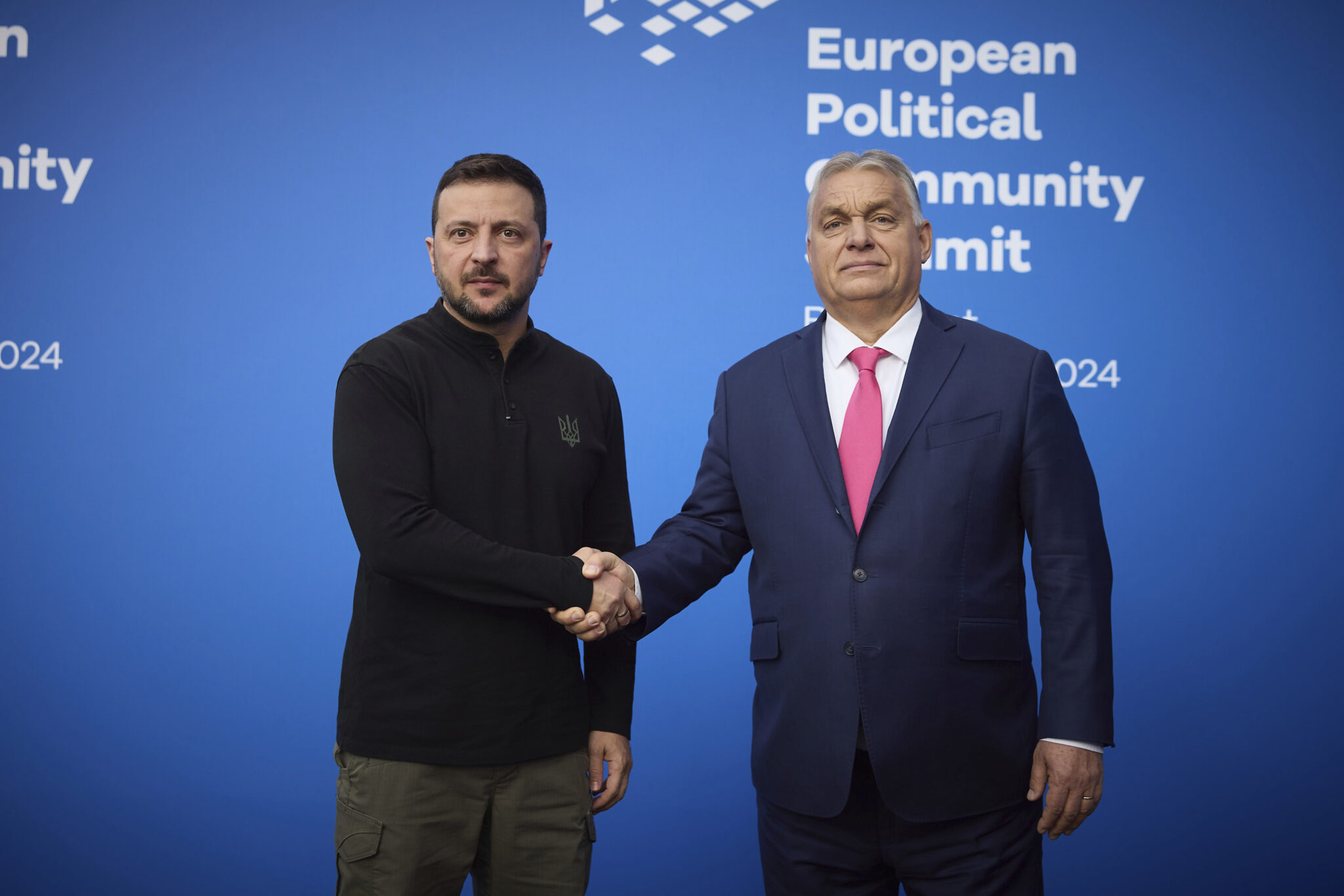
Image: Volodymyr Zelenskyy and Viktor Orbán in Budapest, 2024 // Public Domain




Average Rating