 0
0
 0
0
The Epstein files. The bombs over Tehran. The cost of your weekly shop. These aren’t separate stories. They’re the same story — and they’ve been telling it for decades.
While we are watching the missiles arcing over Tehran and the displacement of hundreds of thousands in Lebanon, something else was quietly happening. In Washington, members of Congress were reading the unredacted Epstein files — files that detail, according to UN experts, “systematic and large-scale sexual abuse, trafficking and exploitation” carried out with an almost unfathomable degree of impunity. This is no coincidence.
Here’s the fact: Congress passed the Epstein Files Transparency Act with a vote of 427 to 1. The Department of Justice (DOJ) released over 3.5 million pages by January 2026. By February, lawmakers reviewing unredacted files were naming names: Emirati businessmen, disgraced politicians, royalty. And still, only one close associate of Epstein’s network is under active criminal investigation. Meanwhile, since 28 February, the US and Israel have been at war with Iran — displacing over 500,000 people in Lebanon, blockading the Strait of Hormuz, and sending energy markets into freefall. US Defence Secretary Hegseth says they have “only just begun to fight.” The declared motivations shift by the day. What does not shift is the human cost.
Both overlaps are consequences of a world organised around the protection of a small, extraordinarily wealthy class of people permitted to operate above the rules that govern the rest of us. Jeffrey Epstein was not a lone predator — he was a node in a network made possible because wealth, in sufficient quantities, buys silence, buys prosecutors, and buys protection. The Epstein files do not just describe an aberration, but a system.
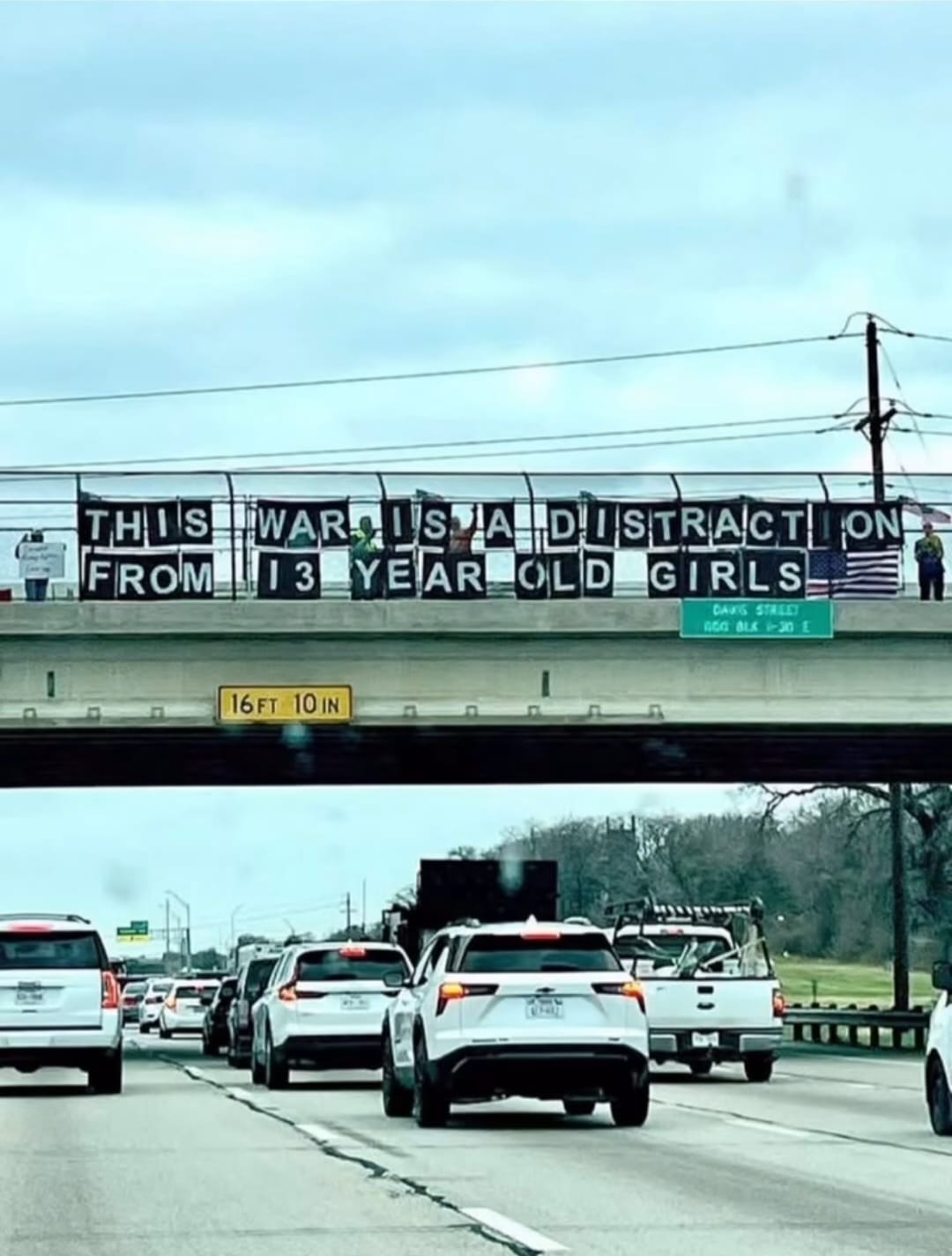
Wars serve a dual function. Officially, they are fought for security and democracy. Unofficially, they are extraordinarily effective at redirecting public attention. This is the oldest trick in the book — as old as time. When oil prices spike and the Hormuz is blockaded, nobody is asking why millions of Epstein documents have yielded almost no prosecutions. An anxious, distracted public is easier to manage. It only requires that powerful people act in their own interests, which they reliably do. and that a media landscape driven by conflict and urgency will always find the explosion more compelling than the grinding exposure of elite impunity.
The untouchable, the Epstein class, whose wealth insulates them from consequence, whose connections inoculate them from prosecution, and whose interests shape the world the rest of us are forced to live in, does not need to coordinate. When you own the platforms, fund the politicians, employ the lobbyists, and retain the lawyers, the system bends toward you automatically. In 2007, federal prosecutors drafted a 60-count indictment against Epstein. It was never filed. He served 13 months, much of it at his own office on “work release”. UN experts in February 2026 said the crimes may meet the threshold of crimes against humanity. This is not a failure of the system. It is the system working exactly as designed — by and for the people it protects.
And the cost of all this is paid by the ordinary people. Every week without accountability from the Epstein files reinforces the same message: certain people are simply not subject to the law. Every missile strike crowds out the slower, harder, more politically inconvenient stories. It exhausts us — which is part of the point. An exhausted public is less likely to organise, demand, or remember.
The suffering in Iran, Lebanon, and Gaza is real and demands our solidarity. But solidarity with those people and scrutiny of the powerful are not in competition — they are the same project. Both require asking “who benefits?” and following that question wherever it leads. The Epstein class didn’t get here because we collectively, structurally, institutionally, let it. They got here through the managed impossibility of sustained attention in a world designed to keep us busy.
A system that protects the powerful is not broken — it is working precisely as intended.
Image: Over I-30 in Arlington, Texas; as posted on Instagram by entxuncutt





Average Rating