 0
0
 0
0
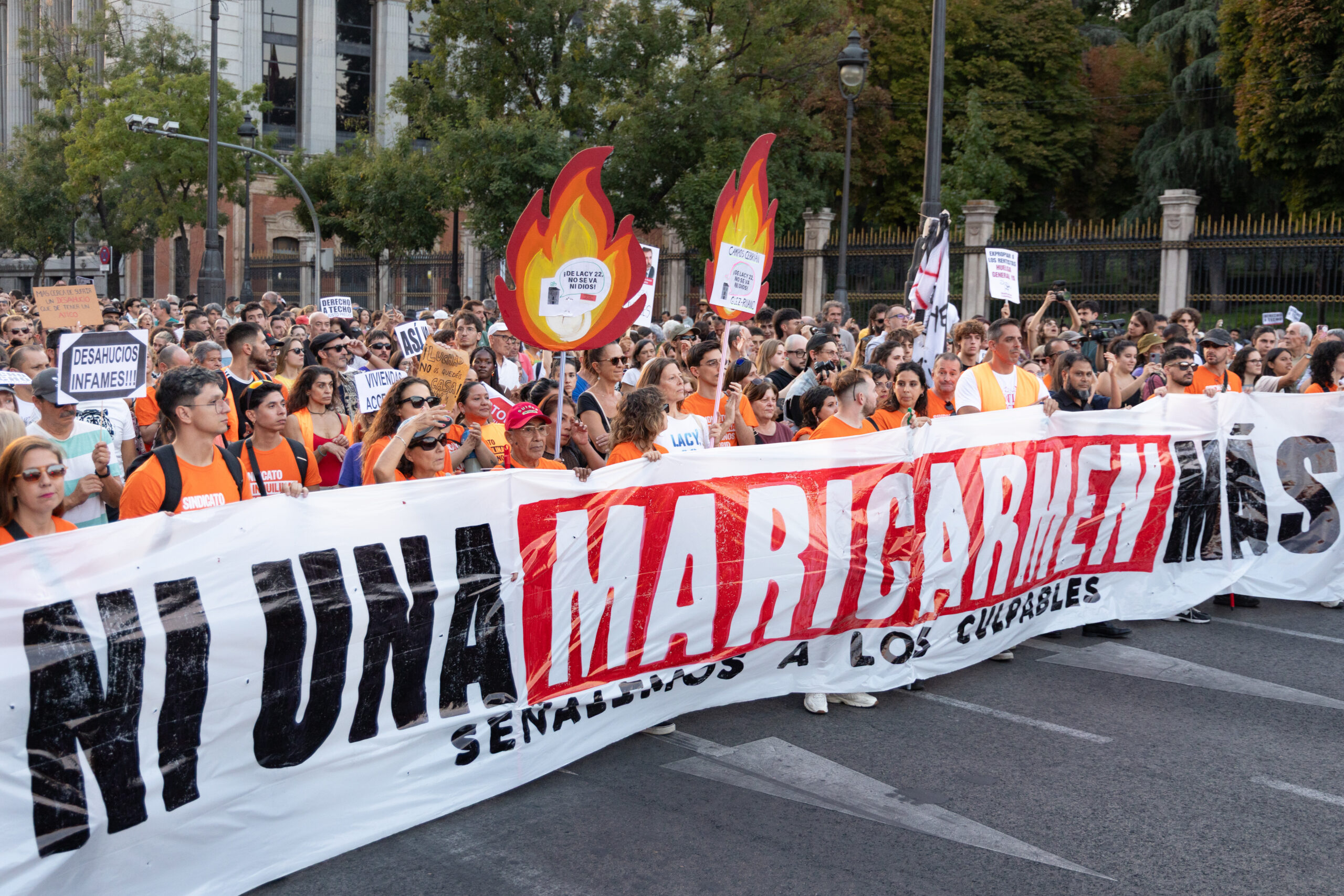
At the age of almost 90, an investment company forced Maricarmen Abascal out of her home due to her being unable to pay such a high rent, of approximately €2,600 a month.
She has now become a symbol of Spain’s housing crisis, and her eviction was the straw that broke the camel’s back. Tens of thousands of people have been protesting across Spain but primarily in the famous square Puerta del Sol in Madrid.
But Maricarmen’s story is just one of thousands. For younger generations, the people who will shape Spain’s future, the crisis is raising a different question: will they ever be able to afford a home of their own? In 2025, 67% of people between the ages of 18 and 34 lived with one of their parents proving that the idea of moving out after university and finding a job is no longer as straightforward as it might seem.
So, why are so many young Spaniards struggling to take the next logical step towards independence?
According to the Emancipation Observatory of the Spanish Youth Council (CJE), the youth emancipation rate has fallen to just 14.5% among 16- to 29-year-olds, the lowest level recorded since records began. This means that increasingly fewer young Spaniards are able to be financially independent and move out of the family home, leaving many reliant on their parents.
Further reports carried out by the CJE show that the average young Spaniard would have to spend 98.7% of their net salary on rent to live independently in Spain. The average income of a young person is around €1,190 a month while the average rent for a home has reached an average of €1,176.
There are three main factors behind Spain’s housing crisis: a lack of affordable housing, rising rents and the growing demand for properties in major cities.
As demand for housing grows, rental prices continue to climb. This makes it increasingly difficult for young people on lower salaries to afford their own home; they have no choice but to spend almost all of their income on rent. The Bank of Spain estimated that the country is short of 700,000 homes highlighting the scarcity of housing available to young people trying to take that next step towards independence.
The growth of tourist and investment properties is putting pressure on Spain’s housing market, and The Bank of Spain has identified increased demand from non-residents. The increase of holiday and seasonal rentals are factors reducing the supply of homes available for residential use in several cities and tourist areas
Notably, in 2023, non-EU residents bought around 27,000 houses and flats in Spain, accounting for approximately 4.6% of all the homes purchased that year. Prime Minister Pedro Sánchez argued “they didn’t do it to live in them… they did it to speculate”.
What began as peaceful protests has escalated in some areas, notably Barcelona, with protestors clashing with police, throwing stones and setting fire to bins. But what will it take for the Spanish government to listen?
The government has responded to the crisis with a number of measures aimed at making housing more affordable and protecting tenants. On Tuesday the 6th of October, Spain’s government approved urgent measures on the country’s housing crisis.
Pedro Sánchez’s government responded by approving new housing measures and he called for an early election on November 29. The new measures will protect vulnerable Spaniards from evictions until 2030 and introduce greater regulation of room and seasonal rentals. They will also introduce a new tax on short-term tourist rentals, with the aim of making more homes available to residents rather than allowing them to be increasingly used for tourists and visitors.
The fact of the matter is, will this be enough? Will these measures finally ease the pressure on families and young people or are they simply putting a band-aid over a crisis that is only going to get worse?
Maricarmen Abascal was eventually allowed to return to her home. But, as one protestor rightfully said, her return means “absolutely nothing”. Like Maricarmen there are “lots and lots of other people who are being evicted”. Her story may have had a happy ending, but for thousands of others, the fear of losing their home persists.
How many more Maricarmen’s will it take for the Spanish government to hear the protestors’ message? Housing in Spain is rapidly becoming a privilege only for the few who can afford it, while Spain’s youth is increasingly denied the basic right to an affordable place to call home.
Edited by Rhyme Elson
Image: Demonstration for the right to housing – Not one more Maricarmen, Barcex, 2026//
CC BY-SA 4.0





Average Rating