 2
 0
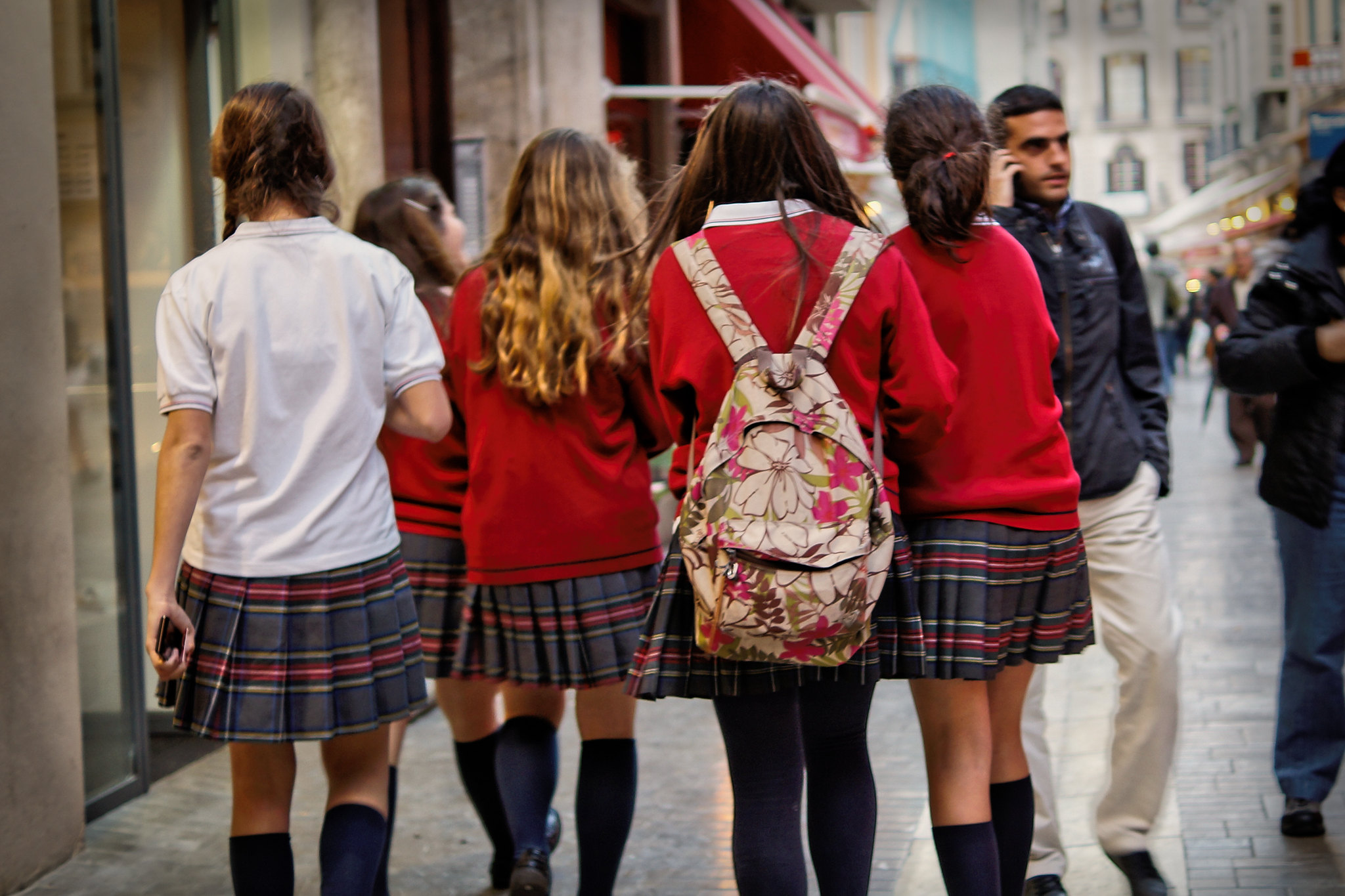
I remember the first time I was catcalled. It was 8 am, and I was in my school uniform.
Last month, schoolgirls Rose, Mae, Aylin and Willow, all 14–15-year-olds, launched a petition to stop the sexualisation of school uniforms in pornography.
‘Barely Legal’ and ‘Teen’ are both trending categories on sites like Pornhub, where consenting adult women are dressed in school uniforms. This fetishisation changes school uniform from a symbol of education and childhood into something sexual.
This petition should not be trivialised. A 2018 study reported that “one in three girls in the UK has been sexually harassed in public when wearing school uniform”. The online fetishisation of school uniforms can have real-world consequences for young girls, reinforcing attitudes that undermine gender equality.
Burnham’s government has dedicated “£15m to… tackle misogyny in workplaces, schools and public places”, alongside introducing new legislation, including the Crime and Policing Act 2026, which bans the depiction of strangulation, children under the age of 16 and incest in pornography. While these measures are a step in the right direction, the girl’s petition aims to eliminate the grey areas and put a stop to the sexualisation of school uniforms altogether.
This petition is about ensuring girls have equal access to education without feeling uncomfortable or unsafe in their school uniforms. Education is a cornerstone of gender equality. If girls feel unable to attend school confidently, their ability to learn is compromised, threatening their futures.
The Protection from Sex-based Harassment in Public Act 2023 and the Crime and Policing Act 2026 are both examples of recent reforms and additions to legislation to ensure gender equality in the UK. However, this petition highlights a wider problem: the attitudes that lead to the sexualisation of young girls must be challenged at their roots.
The Georgetown University Women, Peace and Security Index ranks countries according to women’s safety and wellbeing. The five highest-scoring countries are Denmark, Iceland, Norway, Sweden and Finland, while the UK ranks 23rd.
So, what can we learn from our Nordic neighbours up north about protecting and preserving gender equality?
In Denmark, “Klassens tid” or empathy lessons are taught for an hour each week to children aged 6-16. During these lessons, students discuss their problems with each other, and the class co-operate to find a solution. This teaches listening, understanding and teamwork skills from a very early age. ‘Klassens tid’ outlines empathy as an important skill, educating children on the importance of respect and equality.
In Finland, gender stereotypes are confronted as early as kindergarten, where schools and nurseries are required to “actively and systematically promote gender equality”.
In Iceland, many preschools and primary schools operate under the Hjalli model. This approach promotes single sex education, where girls are taught to develop their confidence, take risks, build things and speak assertively. Boys, meanwhile, are encouraged to explore their emotional side through activities such as playing with dolls and caring for one another.
The Nordic countries actively promote gender equality from a very young age, dismantling gender stereotypes one toddler at a time. Alongside other factors, their commitment to embedding gender equality into education has helped them consistently rank among the safest countries in the world for women.
The petition to ban the use of school uniforms in pornography isn’t just about clothes. It exposes society’s consistent failure to protect young girls. A school uniform should represent education and opportunity, not a sexual fantasy.
This petition is a step forward, but legislation alone will not solve the problem. Attitudes need to be changed. Education on sympathy and respect could advance the fight for gender equality and create a society that is safe and equal not just for women, but everyone.
Malala was shot in the neck so that girls could have a place in the classroom. We should be fighting for them to feel safe getting there.
Image: https://www.flickr.com/photos/florianramel/13820439445/in/photostream/
Edited by Emily Hone
Image: School Uniforms by Florian Ramel, 2014 //





Average Rating