 3
3
 0
0
After the recent fall of Al Fashir to the Rapid Support Forces, the situation in Sudan has been labelled as “one of the worst humanitarian crises of the 21st century”.
Have the people of Sudan been failed by the international community?
What has been happening in Sudan?
As of the 27th of October, Al Fashir—the capital of the Darfur region—fell to the Rapid Support Forces (RSF) after an 18-month siege. The Sudanese Armed Forces (SAF) withdrew, leaving the paramilitary group in full control of the city. This is the latest and most devastating development in a civil war that has already displaced 12.4 million people and killed tens of thousands.
But what has led up to this?
The civil war stemmed from the military coup d’etat of Omar al-Bashir, who served as the head of state of Sudan for 30 years. After years of civil unrest and protests, he was overthrown and placed under arrest. Following his overthrow, military officer General Abdel Fattah al-Burhan, head of the SAF, assumed power. The coup d’etat was organised by al-Burhan and the leader of the RSF, General Mohamed Hamdan Dagalo, who was al-Burhan’s deputy at the time.
However, disagreements between the two generals, rooted in competing political ambitions and control of resources, escalated into armed conflict and shootings in April 2023. Since then, the country has been consumed by a violent struggle for power.
According to the United Nations, both the SAF and RSF are committing war crimes and crimes against humanity, particularly through the deliberate targeting of unarmed, innocent civilians. Both sides are mercilessly targeting those they deem to be part of the opposition.
The UN Fact-Finding Mission reports that the RSF has committed “murder, torture, enslavement, rape, sexual slavery, sexual violence, forced displacement and persecution on ethnic, gender and political grounds“. The devastation of this civil war extends to the entire international community.
Amnesty International has reported that the weaponry used is “almost certainly re-exported to Sudan by the UAE”, a violation of the existing UN arms embargo. It is said to be an intricate network of supply lines throughout nearby African countries, including Chad, Somalia and Libya. According to online sources, the UAE is the primary destination for gold extracted from RSF-controlled areas. In 2024 alone, Sudan’s gold exports reached an estimated $1.5 billion, the majority of which was sent to the UAE.
The ongoing conflict represents a flagrant violation of international humanitarian law. It reflects a world driven by greed over moral responsibility and is a blatant disregard of the Geneva Conventions. Civilians have been deliberately targeted, humanitarian access has been obstructed, and both sides of the conflict have been accused of using starvation, sexual violence, and forced displacement as weapons of war.
International law, a protection of civilian rights and dignity, is being systematically disregarded. As members of the international community, responsibility falls upon us to protect the Sudanese people, through both condemnation and concrete action.
A unified global stance must be taken to prioritise justice and human rights over greed and power.
Edited by: Rida Ali
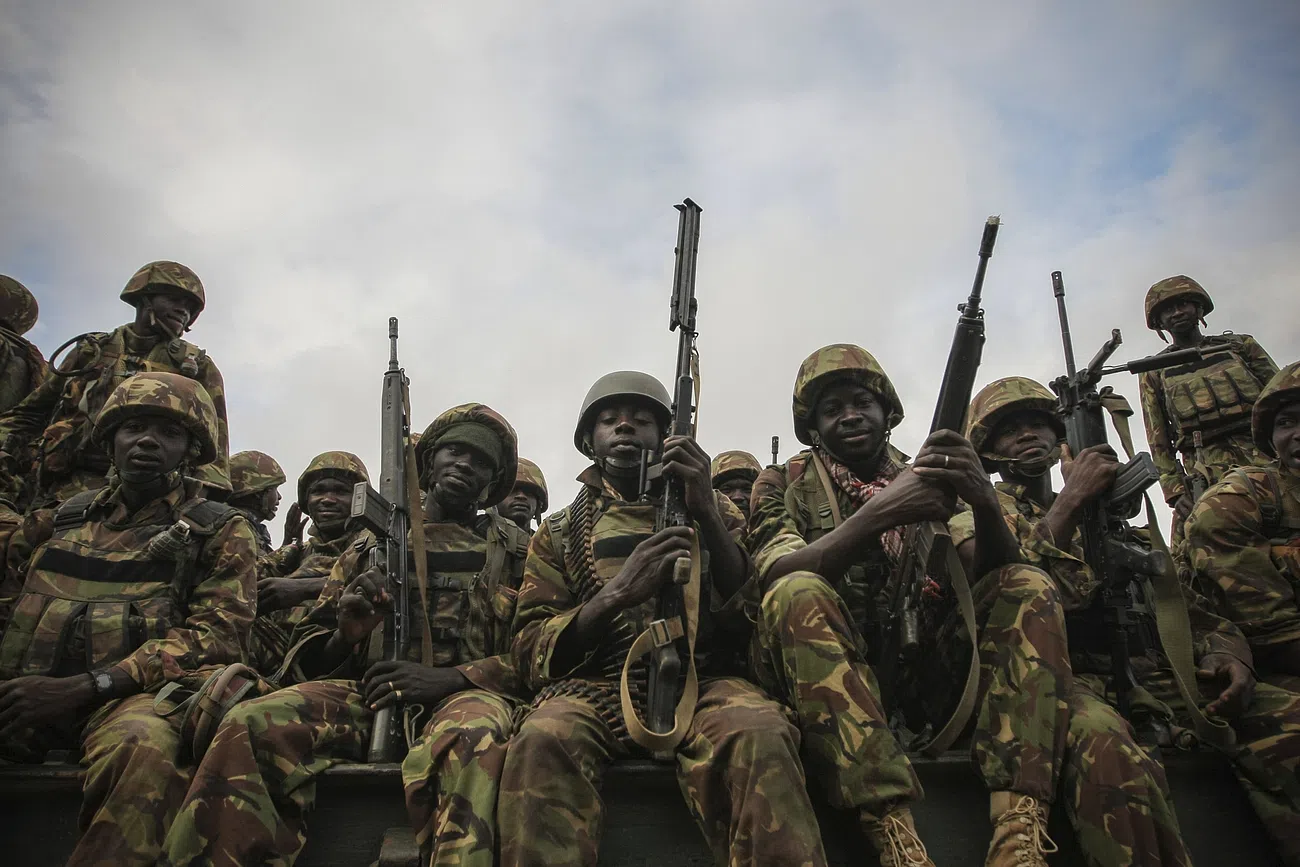
Image Source: AMISOM final advance to Kismayo by AMISOM Public Information, 2012//CC0 1.0 Universal





Average Rating