 0
0
 0
0
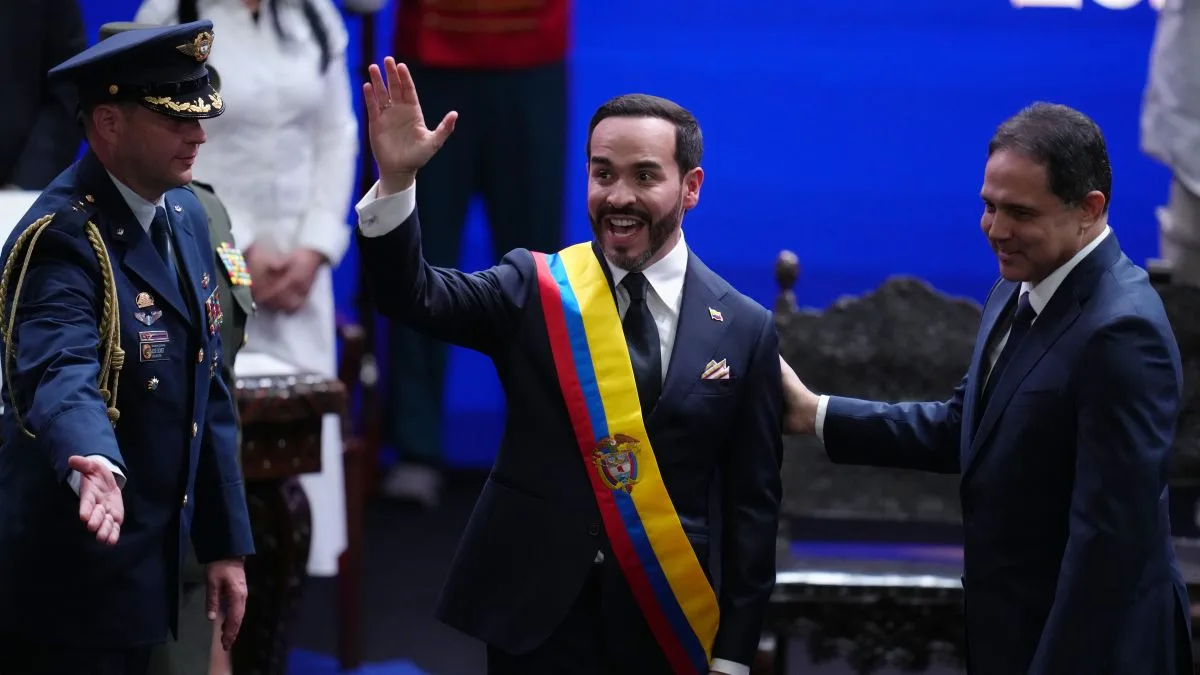
In May of this year, Colombia went to the polls to elect a new right-wing president, replacing the country’s first ever left-wing government. After an intense two rounds of voting in the presidential run-off, and a historically high voter turnout, leftist candidate, Iván Cepeda, conceded defeat. Trump-endorsed Abelardo de la Espriella took the victory on the 21st of June. Against the backdrop of Colombia’s six-decade long internal conflict, this significant political swing from left to right proposes the question of whether this new leadership will bring the country the security it urgently needs, or plunge it deeper into corruption and instability, compromising civil liberties.
Espriella, a far-right former criminal defence lawyer nicknamed ‘The Tiger’, secured victory for the ‘Defenders of the Homeland’ party with 49.66% of the vote, narrowly ahead of the ‘Historic Pact’ party on 48.70%. The razor-thin margin highlighted the deep political divisions within Colombia.
Colombia has experienced decades of turbulence, predominantly as a consequence of the enormous illegal drug trade, which generates high rates of violence, trafficking and displacement. This worsening humanitarian situation is undeniable, with the UN Refugee Agency’s 2026 report stating that 7.1 million people are currently internally displaced. Taking these factors into consideration, it’s easy to understand why this political divide has pushed people to vote in favour of a person promising to deliver more rigorous change to such a volatile country.
Most people will immediately think of Pablo Escobar – notorious drug lord and politician – when the drug wars in Colombia are mentioned. The ‘Escobar Era’ peaked in the 1980s and 1990s, a time where people’s imaginations may go as they think of the slick Netflix show ‘Narcos’ and its catchy soundtrack. With these images in mind, it’s easy to forget that these narco-related problems are still very real. In fact, Colombia’s drug exportation rates are now higher than ever (according to the UN and EAFIT University investigations), and the issues are still very much at the forefront of the social and political landscape of the country. The question of how to tackle these entrenched and ongoing issues is what dominated each of the presidential campaigns.
Espriella’s campaign vowed an ‘iron fist’ approach to the elimination of the countless armed criminal groups in Colombia. This contrasted starkly with Cepeda’s plan of continuing the previous president Petro’s legacy of ‘total peace’, which emphasised communication and negotiation, rather than confrontation. Unfortunately Petro’s strategy to diplomatically fight criminal gangs was unsuccessful, and Espriella’s harder approach undoubtedly tipped the election scale in his favour.
This ‘iron fist’ attitude mirrors the current president of El Salvador’s tough approach to crime. Dubbed the ‘world’s coolest dictator’, Nayib Bukele’s strategy has relied heavily on the building of ‘mega-prisons’ and arrests of tens of thousands of people accused of gang affiliation. Human rights organisations have reported that 2% of El Salvador’s adult population are now behind bars. This highly controversial method has sparked both national and international outrage, due to the inhumane detention of thousands of innocent individuals and unfair ‘mass trials’. Yet numerous leaders around Latin America, from Kast in Chile to Castro in Honduras, have taken inspiration from Bukele’s extreme crackdowns (referred to as the ‘Bukelismo’ – ‘Bukele Model’), with Espriella promising in an interview with The Associated Press to open 10 of these mega-prisons, and kill criminals ‘like rats and cockroaches’.
Through Espriella’s promotion of the use of militant aggression to create ‘peace’, coupled with his support for withdrawal from the UN, it is easy to view Colombia in concord with the recent rise of the far-right in politics internationally. Since taking office, he has rekindled previously cut diplomatic ties with Israel, creating a stronger military alliance intended to help fight narco-terrorism by using their modern surveillance technology. According to ‘Justice for Colombia’, the new government’s policy changes reflect on a ‘broader realignment behind the priorities of the current US administration’. This is significant, as in the months leading up to the polls, US president Trump publicly endorsed Espriella, posting on Truth Social that it was his ‘Honour to give Abelardo my Complete and Total Endorsement’. By strengthening these political relationships with countries like Israel and the US, there is a risk that Colombia could place its own sovereignty on the line by becoming overly dependent on these foreign powers, making them more vulnerable on the international stage.
Ultimately, the political shift in Colombia reflects a population caught between the urgent desire for security, and the need to preserve the freedoms that define a democracy. Decades of armed conflict, drug trafficking and displacement make Espriella’s promise of immediate decisive action understandably appealing. Yet the experiences of El Salvador and other countries pursuing increasingly aggressive security policies demonstrate the risks of treating repression as a substitute for permanent solutions. At this crossroads, Colombia faces repeating the very cycles of instability it seeks to escape. However, this future doesn’t have to be inevitable. If the root causes of hostility can be addressed, while simultaneously upholding human rights and democratic freedoms, the country has the opportunity to build a lasting peace in which security and liberty can coexist.
Sources:
- https://displacedinternational.org/colombias-worsening-internal-displacement-crisis-a-2026-emergency-update/
- https://www.aljazeera.com/news/2026/5/30/opposite-visions-what-to-know-about-colombias-presidential-election
- https://www.bbc.co.uk/news/articles/cgrkqky5lzpo
- https://justiceforcolombia.org/sharp-change-in-colombian-foreign-policy/
- https://www.aljazeera.com/news/longform/2026/5/29/colombias-total-peace-plan-a-failure-or-unfinished-business-for-petro
- https://english.elpais.com/international/2026-06-24/the-far-right-promises-de-la-espriella-borrows-from-milei-bukele-bolsonaro-uribe-and-trump.html
- Bukele:https://directoriolegislativo.org/en/how-nayib-bukele-is-becoming-the-worlds-coolest-dictator/
- El Salvador megaprisons https://verfassungsblog.de/cecot-salvador/
- Honduras megaprisons –https://www.aljazeera.com/news/2024/6/15/honduras-to-build-20000-inmate-megaprison-as-part-of-gang-crackdown
- https://www.intellinews.com/cocaine-trade-overtakes-oil-as-colombia-s-largest-export-450398/
- https://apnews.com/article/abelardo-de-la-espriella-trump-colombia-petro-cepeda-election-crime-bukele-643a808af732c35e240949d69171d65f
- https://justiceforcolombia.org/colombia-human-rights-update-september-2026/





Average Rating