 0
 0
Things had arguably never looked bleaker for Brazil’s Workers’ Party (PT) and its leader, incumbent President Luis Inácio Lula da Silva.
Lula’s right-wing opponent, Flávio Bolsonaro of the Liberal Party (PL), won the first round of the country’s election with over 2 million more votes than Lula. Bolsonaro fell less than three percentage points short of securing a first-round majority and winning the presidency at the first opportunity. Brazil braced itself for a return to the right-wing populism which defined the presidency of Bolsonaro’s father, Jair.
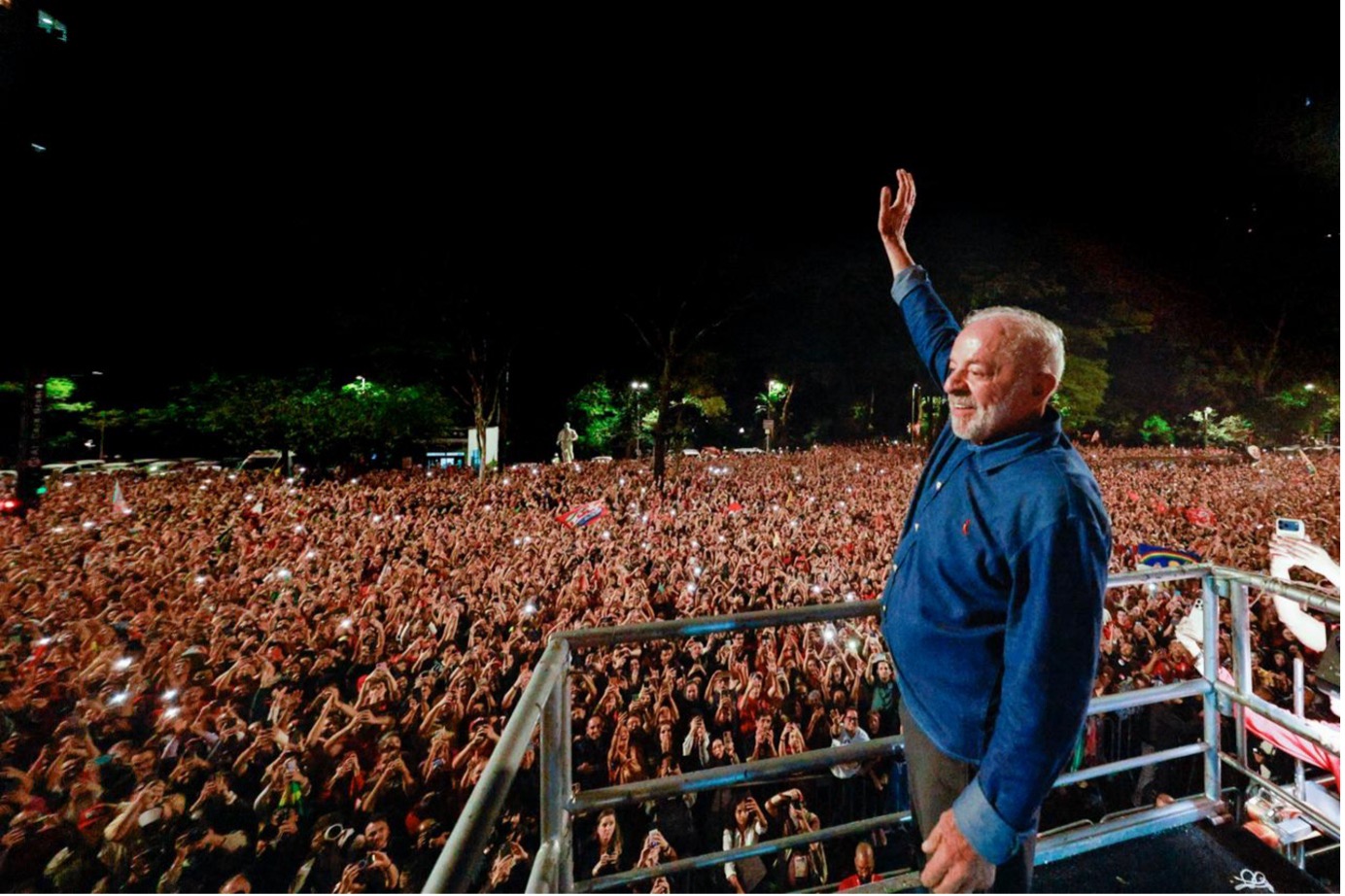
To call the result of the runoff three weeks later a political ‘upset’ then would be an understatement. Through both the percentage and number of votes, Lula’s majority increased from his victory over Jair Bolsonaro four years ago, despite his first-round defeat. Flávio Bolsonaro has now left the country for the US, following his failure to comply with a precautionary order by the Supreme Court to surrender his passports after the resurfacing of an investigation into alleged money laundering.
Bolsonaro, who like his father in 2022 has questioned the validity of his loss, could have been forgiven for thinking he would be president-elect by now. Brazil’s two-round electoral system has never previously seen a candidate who placed second in the first round come from behind to win the presidency in the runoff. Explaining how the incumbent instigated such a dramatic shift in the political environment over just three weeks requires analysis of Lula’s own populist tactics, his long overdue embrace of social media and the mistakes of the PL’s own campaign.
Pork-barrel politics
In the aftermath of his first-round defeat, Lula announced several policies designed to win back voters: Brazil’s 44-hour working week was shortened, without a loss in pay, to 40 hours over business objections – a policy favoured by 70% of Brazilians according to a survey in July. Payments under the Bolsa Família programme, targeted at low-income families, increased in value by 15% and were made early. The government argued that this was to mitigate the effects of the weather caused by El Niño.
Bolsonaro’s supporters called these moves electioneering, noting the Bolsa Família payments were to be made by the 21st of October at the latest – four days before the runoff. Lula is far from an outlier in employing tactics like these though. Jair Bolsonaro himself did the same in advance of the 2022 vote.
Campaigning for the digital age
Often considered a technological dinosaur, Lula, 80, embraced social media as a campaigning tool leading up to the runoff. Dubbing himself the ‘king of the selfie’ despite not owning a mobile phone, the president began to post selfie-style videos on his social media pages, combatting perceptions of a lack of vitality given his advanced age.
His supporters were also quick to mobilise online. ‘Lula’s Army’, a WhatsApp channel with 10.8 million recipients, was formed by Congressman André Janones in the aftermath of the first round, and functioned as a mass mobilisation tool. Users were given tasks to complete to boost Lula, such as sharing campaign videos and sending materials to family members in order to broaden the president’s appeal.
Debates and Mistakes
Both leading candidates declined to attend presidential debates before the first round. The two that were held in advance of the runoff however proved costly for Bolsonaro’s bid. His stunt in the first, where he wrote the word ‘corrupto’ (corrupt) on his hand and highlighted the letters ‘PT’ in the word, backfired. Lula’s supporters, referencing the investigation into Bolsonaro’s finances, used images of the stunt to – quite literally – label Bolsonaro as corrupt himself.
The second saw Bolsonaro address the mother of a child killed during a shooting involving a police officer who he subsequently defended as a lawyer, only to call the mother by her dead daughter’s name. His pejorative reference to Lula (who lost a finger in a workplace accident at 17) as ‘nine fingers’ allowed the president to draw attention to Bolsonaro’s privileged background and present himself as a man of the people – a message that ultimately bore fruit on election day.
What now?
Notably, Lula’s victory was not total and governing over the next four years will not be easy. With the legislature dominated by opposition parties and the PL the largest party in both chambers, he faces an uphill battle to enact his agenda. Economically, interest rates are staggeringly high, and market confidence in his leadership is low (the value of the real against the US dollar tumbled following his victory). On top of all this, the president’s insistence that Brazil ‘will not accept being anyone’s backyard’ is unlikely to go down well with US President Donald Trump, who has also called into question the validity of the result and whose administration has given the Bolsonaro family visas. Time will tell how the defining figure of 21st century Brazilian politics responds to these challenges – but the now four-term president has shown he is more than capable of a political surprise.
Edited by Iris Parkinson
Image: 25.10.2026 – Lula é reeleito Presidente do Brasil, Ricardo Stuckert, 2026 // CC BY-SA 4.0





Average Rating