 0
 0
Poland’s Constitutional Tribunal has ended up at the center of an increasingly serious political and constitutional confrontation. What started off with disputes over judicial appointments has now spiraled into a direct struggle over the institution’s leadership. In the midst of it, stand President Karol Nawrocki and Prime Minister Donald Tusk, both advancing competing claims about the legality of recent events.
The confrontation raises a fundamental question: how can Poland restore the rule of law when the institutions responsible for upholding it are themselves in disputes over their legitimacy?
The crisis can be linked back to 2015, when the then-ruling Law and Justice party (PiS) made controversial appointments to the constitutional Tribunal, including judges to positions that had already been filled. This resulted in the weaking of confidence in the court and contributed to its prolonged institutional paralysis.
Since taking office in 2023, Tusk’s government pledged to restore judicial independence, but their reforms have often been met with resistance from Nawrocki, a political ally of the previous PiS government.
The latest confrontation began on 30th October, when Tribunal judge Anna Korwin-Piotrowska announced the suspension of Tribunal president Bogdan Święczkowski and his deputy, Bartłomiej Sochański. She subsequently assumed responsibility for leading the institution. Święczkowski rejected the decision and maintained that he remained president.
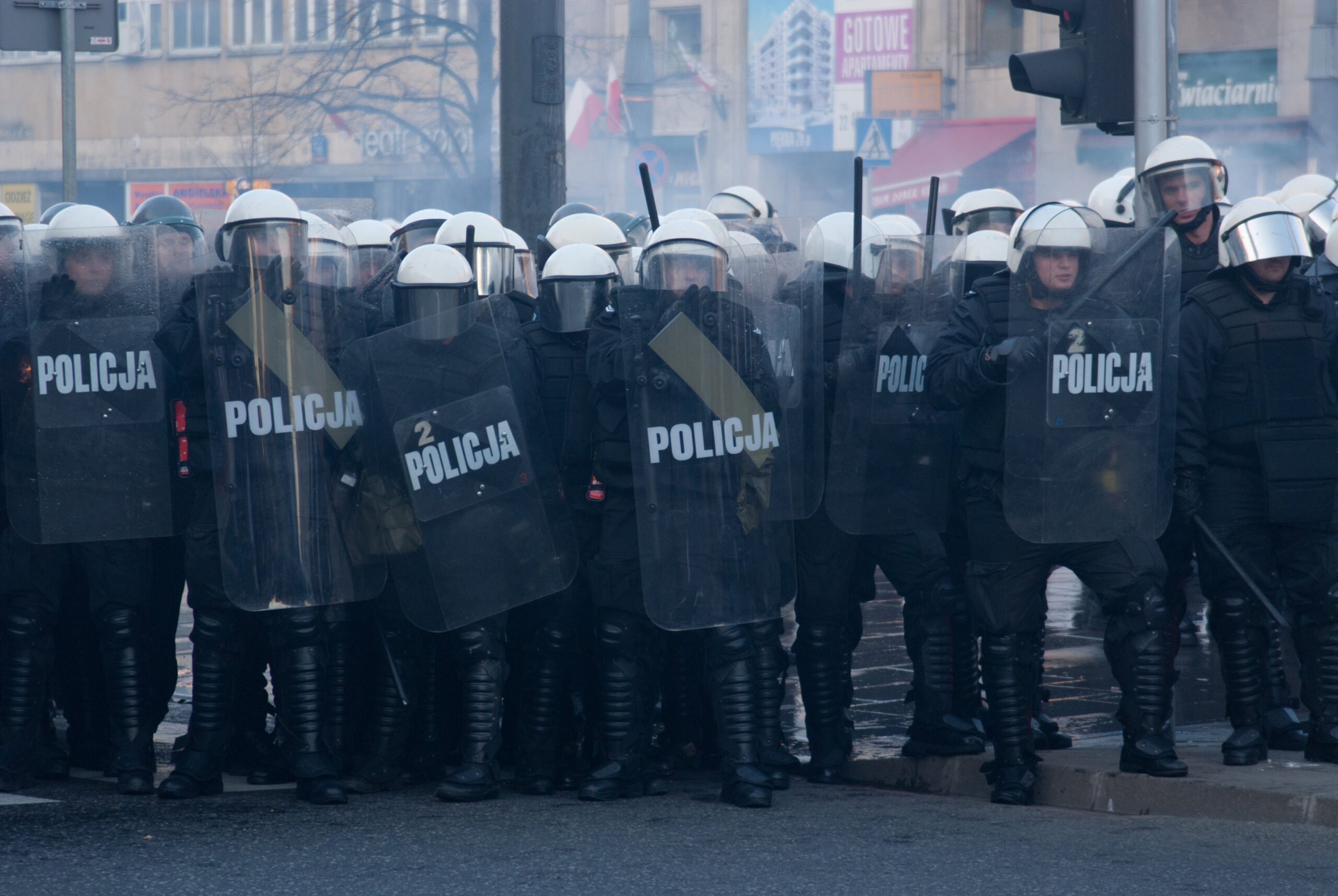
The dispute escalated when Nawrocki had to abruptly returned to Poland from his visit to Senegal, describing the events as a forced takeover of a constitutional institution. Protests followed outside the Tribunal, while police were deployed to maintain order.
However, the legal position of both sides requires scrutiny. The President’s refusal to recognise judges elected by parliament is difficult to reconcile with the recent opinion of the Venice Commission, the Council of Europe’s constitutional advisory body. In its October 2026 opinion, the Commission concluded that the President’s role in receiving the oaths of Constitutional Tribunal judges is primarily ceremonial, not discretionary. The President should not use the process to review parliamentary elections or effectively veto appointments by refusing or indefinitely delaying the oath. The Commission also considered exceptional procedures allowing judges to complete the oath-taking process without the President’s physical participation if he unjustifiably refuses or delays it.
This opinion places significant legal constraints on the President’s position. It suggests that presidential authority cannot be used to prevent judges elected by the Sejm from taking up their constitutional responsibilities. Nevertheless, the opinion is not a ruling on every aspect of the Tribunal crisis, nor does it establish the legality of the government’s subsequent actions.
Korwin-Piotrowska’s decision to suspend Święczkowski is also contested. Constitutional lawyer Mateusz Radajewski argues that Article 130 of the Law on the Organisation of Common Courts cannot provide another Tribunal judge with the authority to suspend its president.
The provision assigns the relevant power to the Minister of Justice in ordinary courts, but the Minister does not exercise supervisory authority over the Constitutional Tribunal. Radajewski therefore argues that this power cannot simply be transferred to another judge. Professor Marcin Matczak has also expressed serious doubts about the legal basis for the suspension.
Consequently, neither side can claim an unrestricted legal mandate, and with the absence of a clear, accepted legal resolution, the institutional conflict has thereafter deepened.
The consequences extend beyond the Tribunal itself. If competing authorities continue issuing contradictory decisions, the institution risks becoming unable to perform its constitutional function. The dispute also raises questions about the methods used to restore judicial independence. A government may have legitimate reasons to address institutional damage, but corrective measures must themselves respect constitutional procedures.
What happens next?
A negotiated agreement could establish a temporary framework for the Tribunal’s operation while the disputed legal questions are addressed. Alternatively, the conflict could move towards further legal proceedings, political confrontation and attempts to change the institution through legislation. Any lasting settlement would need to clarify the status of disputed appointments, the authority of the Tribunal’s leadership and the President’s constitutional role.
The immediate challenge in not simply deciding who control the Tribunal, but establishing a legal framework that all constitutional institutions are required to respect. Furthermore, this is an ongoing confrontation, not a concluded political dispute. Developments in the coming days will be crucial in determining whether the crisis moves towards negotiation or further institutional escalation.
Edited by Amelie Barker
Image: Warszawa, Marsz Niepodległości 2011 by Adam Kliczek, 2011 // CC-BY-SA-3.0






Average Rating