 0
 0
If you’ve seen news about the Ballon d’Or this week, I can almost guarantee what you will have seen first is a picture of Harry Kane holding his trophy. Undoubtedly, as the first Englishman to win it in 25 years, a certain level of hurrah was expected.
What this has come at the cost of, it seems, is the roses Alexia Putellas (the winner of the women’s prize) undoubtedly deserves. The Barcelona player took the prize for a record equalling third time – particularly impressive when you consider that the women’s prize was added in 2018. The Ballon d’Or has run since 1956.
Putellas’ speech, thanking friends, family, and her club of 12 years, was three minutes shorter than Harry Kane’s. Yet the internet, including former France defender Adil Rami, mocked her acceptance speech for its length. To add insult to injury, Alexia was even called ‘Alexis’ at one point in the evening and referred to by the last name ‘Bonmati’ on the official Ballon d’Or Instagram account. Harry Kane’s name remained consistently correct throughout the event.
What this exposes is the deep-rooted misogyny that continues to mar professional football, only exemplified by the biggest awards of the game. This year’s ceremony did lack the overt sexist controversy of earlier years – particularly the horrifying moment Aga Hegerberg became the first female Ballon d’Or winner and was asked by the presenter Martin Solveig to twerk on stage.
Despite the lack of overt sexism, the event still portrays the inequality in men’s and women’s football. Barcelona won all the big awards of the night, including for women’s club of the year. Yet, during the club president Joan Laporta’s acceptance speech, his focus was on his belief the men’s team could clinch the Champions League, in a particularly tone-deaf moment.
The substance of the awards themselves also expresses the lack of full equality. Despite receiving something for the same categories as the men, which you would think is a step in the right direction, the number on the shortlists betray otherwise. For the young talent award, five were nominated for the women’s. For the men’s, this figure was twice as many, at ten. The same goes for the goalkeeper awards. To top it off, the voting period of the awards (3 August 2025 to 19 July 2026) was clearly geared for the end of the men’s world cup. Yet this year’s rearranged Wafcon, which ended on the 16 August, did not make the cut, excluding names like Valentine Nguele, Cameroon’s head coach.
The women’s awards only starting in 2018 has also left a dearth of former winners to present the awards. Putellas was handed the trophy from Michael Owen, accompanied by a video reel highlighting all of Owen’s achievements. Putellas’ record-breaking achievement appeared, once again, to be overshadowed by a male player.
Women’s football remains underfunded, particularly at a local and grassroots level. Despite this, from 2020 to 2024 the number of women and girls playing football has increased by 54% an exponential increase which is only likely to continue.
Yet as a football player myself, and a woman, I find it deeply disturbing that the media pushes men’s football to a much greater extent. I constantly question the internal narratives that have been set up by years of systematic preference for the men’s game (alongside historical bans and restrictions from the government). Watching the Ballon d’Or this year, women’s football is clearly undermined, which can only raise concerning questions about how women’s football continues to be perceived on the world stage.
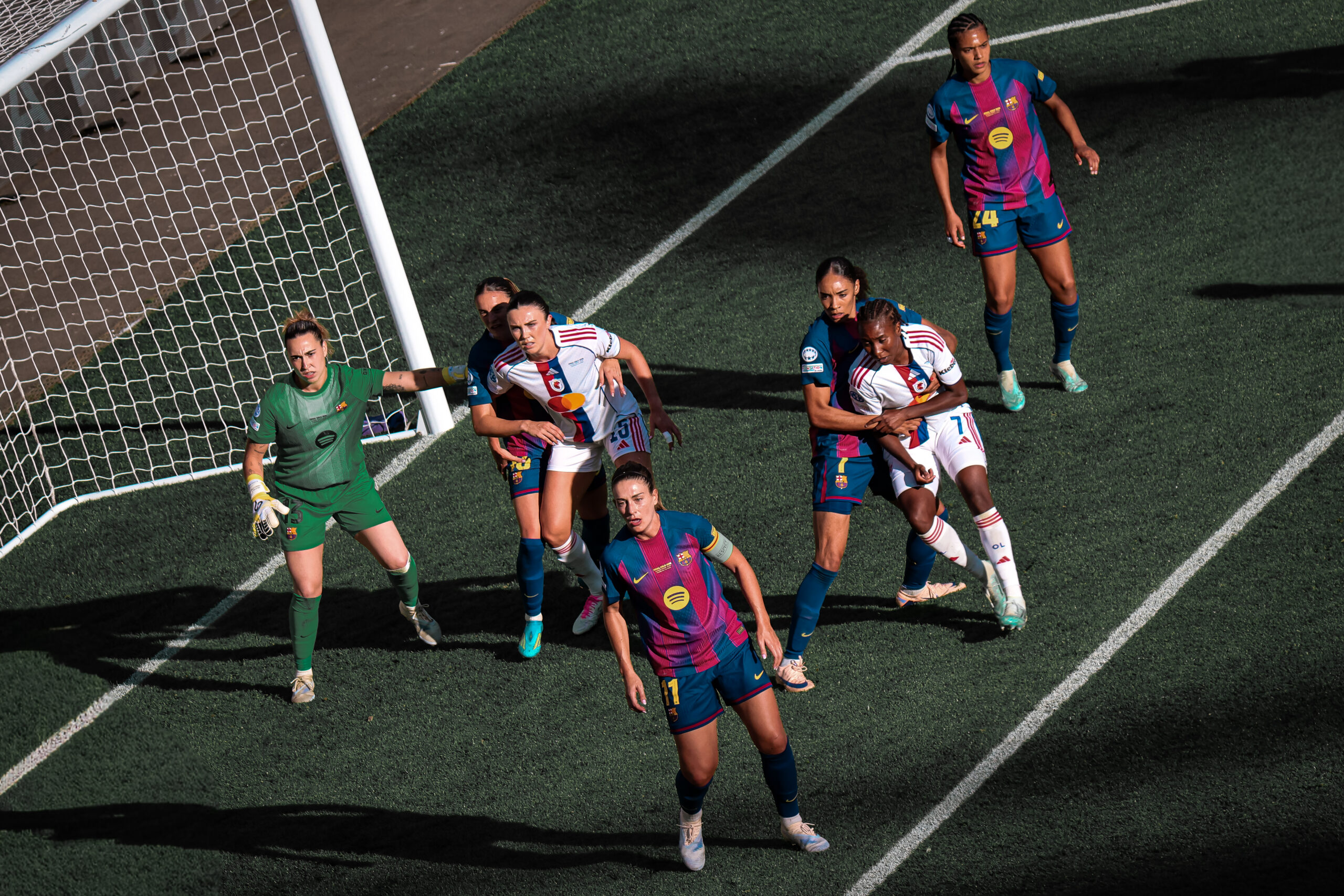
Image: UWCL 2025-26 Final A18.jpg by Michael Emilio, 2026//CC BY 4.0
Edited by: Rhyme Elson





Average Rating