 3
 0
After millions of Americans headed to the polls this week to cast their vote for the midterms, the votes are finally in. Donald Trump suffered a major political setback as Democrats have taken control of both Chambers of the U.S. Congress in the 2026 midterm elections. The result marks a significant shift in Washington by ending two years of Republican control. It shows how Americans feel about his presidency and serves as a reminder that Trump’s public ratings are under a new level of scrutiny.
Understanding the Midterms
Unlike Presidential elections, which take place every four years, midterm elections run halfway into a president’s term. They do not decide who occupies the White House; instead, they determine who controls Congress, which is the legislative branch responsible for making federal laws and checks the President by holding them accountable. It is Congress that holds the authority to impeach or remove a President from their seat. This also applies to vice presidents and other Federal civil officers on accounts of ‘Treason, Bribery or other high Crimes and Misdemeanours’.
Congress is made up of two chambers: The House of Representatives and the Senate. The House has 435 voting members whose seats are allocated to states according to population. All 435 seats are contested every two years. The Senate has 100 members, with each state electing two Senators regardless of population. Senators serve six-year terms, so roughly one-third of the Chamber is elected every two years. For a Party to control the House, it needs a majority of seats. In the Senate, a party generally needs 51 seats.
What has changed?
Before the election, Republicans controlled both Chambers, giving Trump a Republican majority which would support his agenda in the legislature. However, Democrats have now flipped both the House and Senate, securing control of Congress.
The scale of the shift has come at an extremely important time. Democrats gained 7 previously republican held seats, including victories in traditional republican states like Texas, Kansas and Iowa. Texas was a massive upset as James Talarico became the first Democrat elected to the state Senate since 1988.
This is known as a ‘flip’, where the control of a chamber moves from one Party to another. It means that Democrats are no longer just an opposition party on the sidelines challenging Republican decisions; they now have the institutional power behind them to influence what happens in Congress.
What does this mean for Trump?
Whilst Trump remains president, his ability to govern has become considerably more complicated. Democratic control means he can no longer rely on Republican majorities to pass legislation. Trump has made his opinions towards immigration and government spending clear, with ICE activity at an all-time high and starting a war with Iran; he will now face greater resistance when proposing new policy and an agenda than before.
The Senate also has an important role in approving presidential appointments, including senior government officials and federal judges. A democratic majority can block or delay Trump’s nominees, limiting his ability to go unchecked when shaping these important bodies of government.
Most importantly, Democrats now have greater power to investigate and scrutinise the administration. Congressional committees can hold hearings, request documents and even investigate decisions made by the president and his officials. This could place renewed attention on Trump’s policies and conduct in office.
However, this does not mean Democrats are going to simply remove the power from Trump or reverse every policy. He remains president and retains executive authority. Any major legislative changes will still need to pass the political and legislative process.
What does this mean for Trump’s leadership?
Midterm elections are often viewed as a referendum on the sitting president. This election is an opportunity for voters to reflect on how they feel about the current administration; in this case, the midterm results appear to reflect widespread frustration. Currently, it seems these frustrations are forming over key issues that the American people are facing. The US economy is at the forefront of American voters’ minds, who are struggling with the increase in fuel, groceries, housing and healthcare. Inflation remains above the level targeted by the US Federal Reserve, partly due to the war in Iran. Democrats are also blaming Trump’s aggressive trade tariffs for pushing up prices. Concerns over immigration and AI have been common causes for complaints.
Whilst Trump has not lost the White House, he has lost control of Congress, which is a direct reflection of how people are feeling about his current presidency. The balance of power in Washington has shifted. For the next two years, the question is not simply what Trump wants to achieve, but rather what he can achieve with his political opponents now holding the keys to Congress.
Trump still holds the presidency; however, Democrats now hold the power to challenge it. This is the significance of the midterms: they have changed the balance of power without changing the president.
Edited By: Adnana Moraru
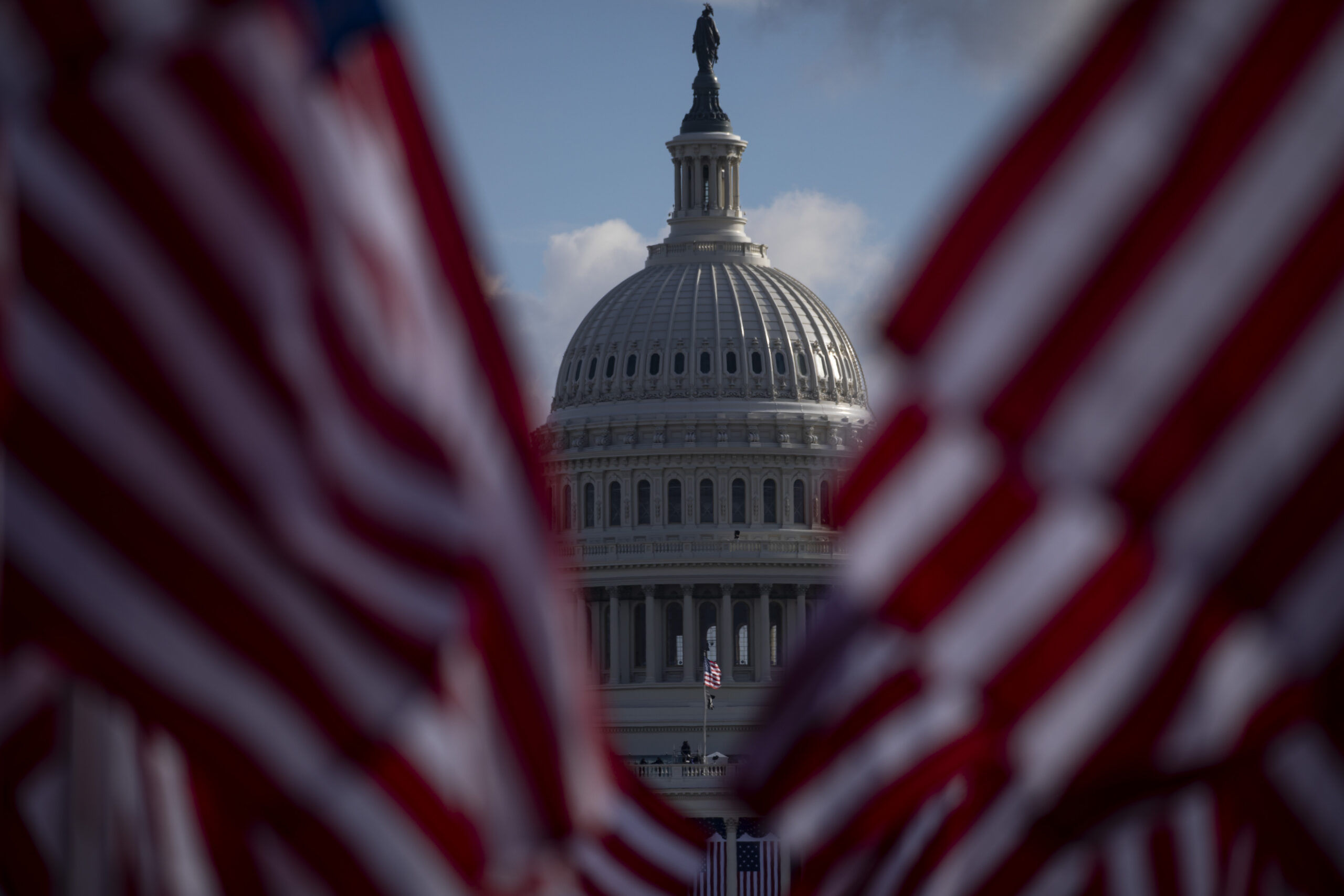
Image: American flags near the Air & Space Museum in Washington, D.C., Matt Hecht, 2021 // CC0 1.0 Universal





Average Rating