 1
 0
Standard political commentary frequently dismisses Nick Fuentes and his “Groyper” network as a toxic, fringe internet subculture destined to stay at the margins of American politics. This fundamentally misunderstands what this movement has become.
While establishment Republican leaders regularly issue formal disavowals, the core tactics, rhetoric, and foundational worldview of Fuentes’s explicitly white-nationalist, anti-globalist “America First” movement are systematically capturing the GOP’s youth wing. Rather than attempting to win over the current Republican leadership, this movement operates as an ideological vanguard, waiting out old-guard conservatism and positioning itself to inherit the party infrastructure.
Moving the Overton Window
To understand the rise of the Groyper network, one must look at how digital culture intersects with political radicalisation. Emerging from the aftermath of the 2017 Charlottesville rallies, Fuentes transformed a livestreaming format into a dedicated political youth base.
The movement’s primary engine is not traditional policy debate, but the strategic use of internet subculture and irony. By wrapping hardline white nationalism and extreme Christian traditionalism in layers of “edgelord” humour and memes, the movement creates a shield of plausible deniability.
Through organized campaigns, such as the “Groyper Wars” where followers targeted mainstream conservative campus events (like Turning Point USA and Young Americans for Freedom) with coordinated Q&A disruptions, the movement forced mainstream conservative influencers to answer increasingly radical questions on demographic shifts, foreign policy, and trade. The goal was to drag the “Overton Window”, the boundary of acceptable public discourse, sharply to the right, making standard conservative talking points appear weak by comparison.
Fringe to Mainstream
What was once an isolated online faction has rapidly bled into the mainstream operations of the American right. Rather than relying on traditional election victories, Fuentes’s movement has succeeded through an ideological capture of the conservative ecosystem, transforming from an outside spoiler into an influential force within mainstream conservative discourse. Prominent right-wing media figures and high-profile commentators have increasingly platformed Fuentes, granting his brand of populism direct access to millions of mainstream viewers.
More critically, a silent generational transition is underway in the lower ranks of conservative politics. Legislative aides, campaign interns, state committee staffers, and digital strategists are increasingly drawn from online-native youth who have ingested Groyper rhetoric. Following Fuentes’s interview with Tucker Carlson in late 2025, New York Timescolumnist Michelle Goldberg noted his growing influence, while conservative writer Rod Dreher reported a claim from a Washington, D.C. source that roughly 30 to 40 percent of GOP staffers under thirty were Groypers. Though disputed by other observers, the statistic underscores how deeply the movement’s ideas have penetrated the junior machinery of the right.
Left-Wing Polarisation
Extremist movements rarely flourish in isolation; they feed heavily on reactive polarization. A primary driver funneling disillusioned young conservatives into Fuentes’s orbit is the high-profile rise and visibility of radical left-wing political forces, most notably organizations like the Democratic Socialists of America (DSA).
This dynamic creates a destructive cycle of hostile symbiosis. The electoral gains, activist demonstrations, and sweeping policy demands of democratic socialists, who call for fundamental economic restructuring, border reform, and cultural re-engineering, are actively weaponised by Fuentes. He frames the political landscape as an existential, zero-sum war for the preservation of Western society.
When hyper-online, right-leaning youth observe the far left pushing aggressive institutional changes, classic “Reaganite” conservatism, focused on tax cuts, deregulation, and constitutional procedure, strikes them as weak and completely outmatched. Fuentes offers a reactionary counter-weight: an equally unyielding, hardline movement that openly discards liberal democratic norms to wage total ideological warfare. As both political extremes dominate digital discourse, the middle ground rapidly collapses, turning the Groyper network into the primary landing pad for young men on the right seeking an aggressive alternative.
Midterm Sabotage
Rather than acting as loyal party foot soldiers, Fuentes’s movement functions as an active, unpredictable spoiler force. During the 2026 midterms, frustrated by foreign policy decisions, inflation, and unfulfilled promises on trade and borders, Fuentes explicitly urged his base to stay home or “vote blue no matter who” to intentionally weaken the GOP.
This tactical sabotage proved to party elites that slim margins in battleground districts cannot be secured while alienating the far-right youth base. By weaponizing election losses, the movement pursues a “cleansing fire” doctrine: intentionally engineering Republican defeats to collapse moderate leadership and force the party to adopt the Groyper platform out of sheer political survival.
The Future
The rise of the “America First” movement is not a temporary aberration or a fringe anomaly; it is an inevitable political realignment. What Nick Fuentes and his followers represent is not an artificial disruption of American conservatism, but a direct expression of what a growing segment of the electorate actively demands: an uncompromising rejection of globalism, an absolute end to international entanglements, and an aggressive posture against cultural liberalism.
Establishment gatekeepers may issue press releases and enact formal purges, but they are fighting an arithmetic reality. The older, corporate-friendly, interventionist consensus of the Reagan era is dying out, replaced by a generation raised on hyper-polarized digital media and fueled by deep institutional distrust. The Groyper network did not invent this appetite, it simply tapped into it first. As demographic and cultural shifts accelerate, the transformation of the Republican Party into a hardline national-populist vehicle is no longer a question of if, but when. The future of the American Right has already arrived; the rest of the political system is just catching up.
Edited by Seth Dellow.
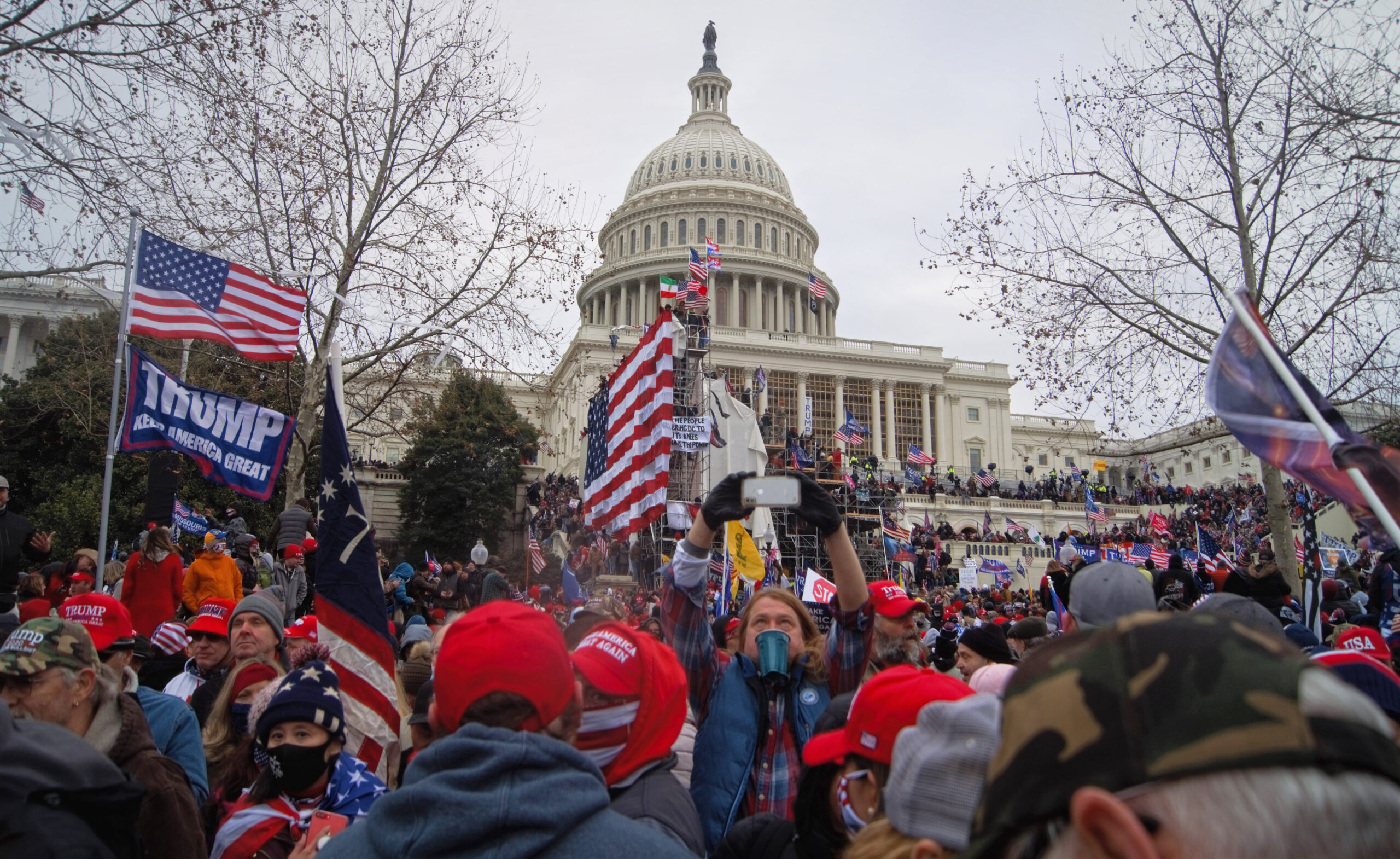
Image credit: Tyler Merbler from USA, CC BY 2.0, via Wikimedia Commons





Average Rating