 0
 0
France’s decision to negotiate deportations with Afghanistan’s Taliban authorities reflects a wider European shift towards migration enforcement. But while European governments insist that technical cooperation does not amount to diplomatic recognition, the argument raises a more difficult question: what political advantages does the Taliban gain in return?
On 2 November, French Interior Minister Laurent Nuñez confirmed that France had opened technical discussions with Afghanistan’s Taliban authorities to facilitate the deportation of undocumented Afghan nationals, particularly individuals considered threats to public order. France is now following a broader European approach that includes Germany and Norway, despite continuing international sanctions and the Taliban’s restrictions on women’s rights.
The French government presents the decision as a security measure, not a diplomatic change. Its Foreign Ministry insists that France does not recognize the Taliban and has no intention of doing so. However, the distinction between refusing diplomatic recognition and establishing practical cooperation is becoming increasingly difficult to maintain.
France is not the sole figure in this affair. In June, a Taliban delegation met European Commission officials and representatives of 15 EU member states in Brussels. The discussions focused on identifying Afghan nationals eligible for return, issuing travel documents and facilitating deportations. In October, 19 EU member states and Norway signed a letter calling for a stronger common approach to returns. The scale of this cooperation suggests that engagement with the Taliban is becoming an increasingly practical component of European migration policy, rather than an isolated French decision.
For European governments, the attraction is straightforward. Deportation requires cooperation from the country receiving the individual, including the identification of nationals and the provision of travel documents. Without communication with Kabul, returning Afghan nationals becomes considerably more difficult. Euronews reported that only 340 of 14,270 Afghan nationals ordered to leave the EU during the first nine months of 2025 had actually been returned. This helps explain why governments are increasingly willing to establish direct channels with authorities they previously sought to isolate.
The benefits, however, are not necessarily one-sided. Since returning to power in August 2021, the Taliban have sought to overcome their diplomatic isolation and establish themselves as Afghanistan’s legitimate governing authority. Direct discussions with European governments offer an opportunity to advance that objective. A particularly significant detail emerged in Le Monde: a French diplomatic source claimed that the Taliban had secured an agreement in principle to establish a working group, appointed by the movement, inside Afghanistan’s consulate in Paris. Such an arrangement would give Taliban representatives an institutional presence in France. The French Foreign Ministry subsequently declined to confirm the reported agreement, stating on 5 November that no such working group or Taliban consular delegation currently existed. Nevertheless, the report illustrates what may be at stake beyond deportation procedures: the question of who represents Afghanistan abroad.
The consequences extend beyond diplomatic symbolism. Afghanistan remains a country in which returning individuals can face serious human rights violations. A UN report published in July 2025 documented cases of torture, arbitrary detention and threats against people forcibly returned to Afghanistan, particularly former government officials, security personnel, journalists and civil society activists. The report called for individual assessments before deportation and warned against returning anyone facing a real risk of serious violations.
Meanwhile, the Taliban’s domestic policies have not moderated. In October 2026, UNAMA reported that at least 52 women and one girl had been arrested or detained in Kabul and Herat between July and September for alleged violations of restrictions on women’s dress and public conduct.
The contradiction is therefore not simply that France is talking to a regime it condemns. It is that European governments are attempting to secure practical cooperation from that regime while maintaining a policy of political isolation. Although technical discussions do not constitute formal recognition, repeated engagement can gradually provide the Taliban with something it has been seeking: international access and a degree of political acceptance.
Ultimately, the cost is measured not only in the risks faced by individual returnees, but also in the diplomatic position Europe is gradually creating for the Taliban. European governments may gain greater control over deportations, but they must also confront the possibility that their migration policies are helping an internationally isolated regime regain a place at the diplomatic table.
Edited by Amelie Barker
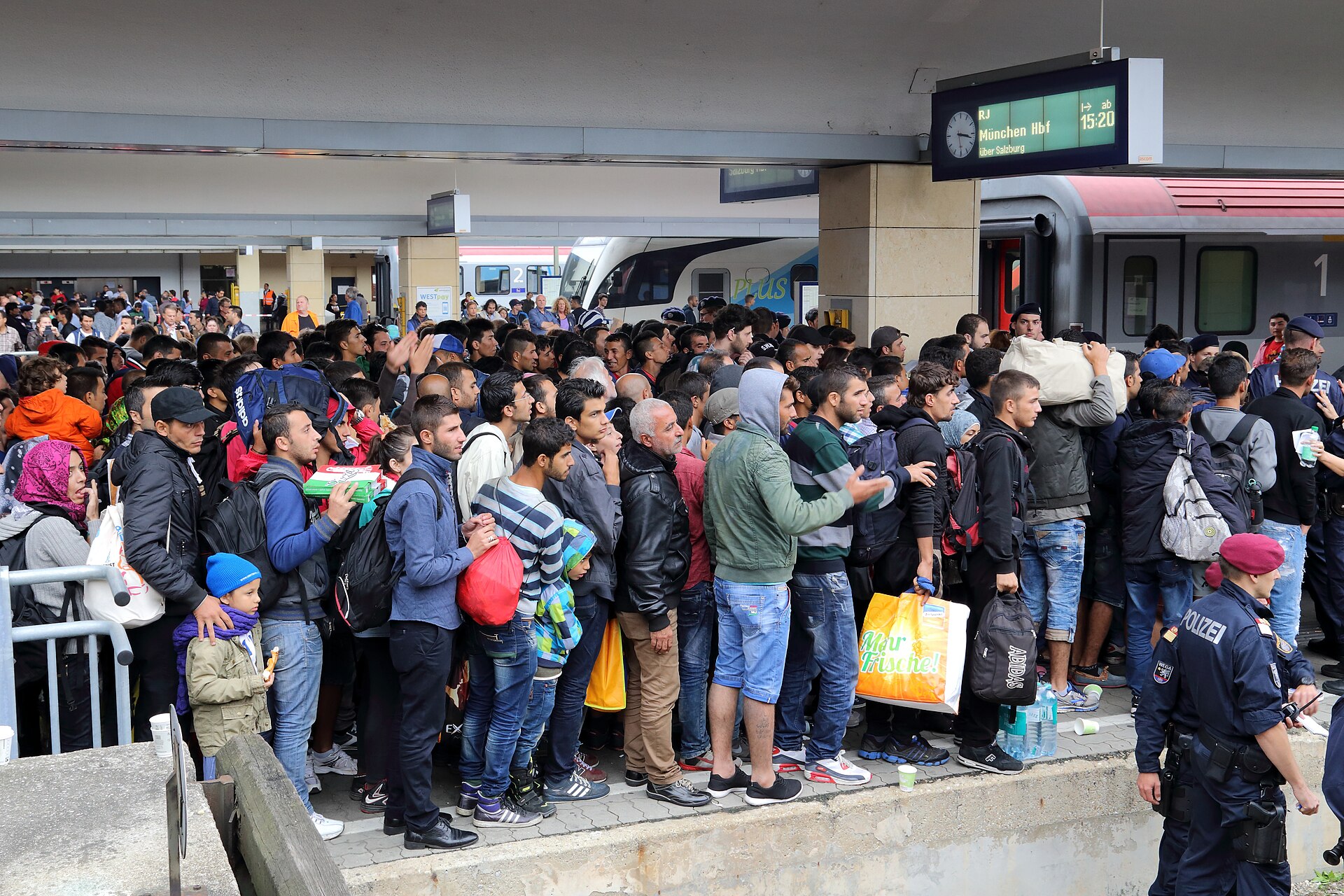
Image: Wien – Westbahnhof, Migranten am 5 Sep 2015, C.Stadler, 2015 // CC BY-SA 4.0






Average Rating