 0
 0
The past week in politics has been a historic one. The Democratic Party in the USA have overturned the Republican iron grip on control, achieving majorities in, and so winning control of, both the Senate and the House. The impact of these recent midterm results is that the Democrats have taken control of Congress for the rest of Donald Trump’s presidency. This change is even more shocking as the Democrats won control in Republican strongholds, Texas, Ohio, and Kansas – which last selected a democrat almost a century ago. This unexpected shift in political standing has left the Republican Party spitting dust from the Democrats’ rapid progress. Not only does this recent change provide insight into the changing political landscape in the USA, but it also brings to light the personalisation of recent politics. The cult of personality fostered by Donald Trump has been largely documented and has been shown to have influenced millions of voters. These midterm results suggest that it now appears to be facing opposition. A question that results from these midterm results is: how far can personality go in securing votes, and why is the modern voter base so swayed by personality?
Although the recent midterm elections in the USA have brought attention to the polarisation of politics, it is not an issue limited to the USA. The personalisation of politics is a global phenomenon within modern politics. The contemporary political stage has seen an increased focus played by both parties and voters on the character of political leaders. The assessment of political actors through their personality has created a worrying trade-off between the weight of personality and the efficacy of policies. If an effective personality can overpower poor policy, we are in a dire political situation; one where political leaders can be advertised to the populace, achieve and maintain support despite poor policies, and lead without critical assessment from the majority of the voter base. It is fundamental to democracy that our political elites are consistently checked by the public in order to protect the public from an unshakeable monopoly of power.
In recent years, political parties have been placing increasing weight on the representation of their party leader within media. The ideal of a party figurehead has always been present within politics; however, it is becoming increasingly popular on the modern political stage. Milazo, a Professor of Politics, and Hammond, an Assistant Professor, support this, suggesting that there is “ample evidence that evaluations of party leaders influence voting behaviour”. It’s a simple equation: as the character of political leaders has been ascribed greater weight, attention paid to policies has diminished. Although this appears to be a natural change, it is a worrying one nonetheless. Analysis by Caprara, a Professor of Personality Psychology, proposes that modern politics offers voters a huge amount of information from various sources and, as a result, citizens utilise cognitive heuristics as efficient mental shortcuts. One of these shortcuts used to assess a politician’s capability is a ‘dispositional heuristic’ that anchors impressions about politicians’ intentions to traits. This appears to explain the increased focus put on personality by voters.
As a result, the increased focus on personality can be explained by an overloading of information onto the typical voter, which leads them to avoid the heavy consideration that all the available information demands and instead rely on their judgement of the character of the politicians. However, the increase in media focus on personality is also a contributing factor. The growth in media consumption within the last decade incentivises political parties to play into the dispositional heuristic and advertise their party leader. If the party leader is viewed in a positive light, the party will be reflected in a positive light. Therefore, a cycle in modern politics appears to be present; a focus on the personality of party leaders is beneficial for the party, as it allows them to control the narrative of their party irrespective of the policies they propose. Also, the increased advertising of party leaders’ personalities increases the focus the public places on personality.
As previously stated, although the recent midterms provide an appropriate lens through which to assess the personalisation of politics, it is not an exclusively American affair. For example, within the United Kingdom, Zack Polanski of the Green Party, Nigel Farage of Reform UK, and Andy Burnham of Labour have all seen recent advertising campaigns that bolster their characters.
Despite the personalisation of politics being a global issue, the American midterms are helpful in order to provide insight into whether personality has overtaken policy. The recent success of the Democrats suggests personality can only be convincing temporarily. The Republican defeat in both the Senate and the House provides hope that the public is still capable of critically assessing policy and not allowing personality to overcome poor policy. Analysis by ‘The Economist’ suggests that the republican party was unsuccessful in the Midterms due to economic policy, more specifically regarding inflation, the economy, government spending, and tariffs. The Economist claims that “In 2024 many voters knew his [Trump’s] character but still saw him as a businessman and dealmaker who could deliver what they desperately wanted, after the surge in inflation in the Biden years.” As such, this analysis proposes that the poor economic performance of the US was what drove the Democratic vote, overcoming Trump’s persuasive personality. This implies that Trump’s policy in this instance outweighed his personality.
Overall, policy preferences and ideology remain major drivers of electoral behaviour. An attractive personality struggles to outweigh objectively poor performance. However, personality does appear to assist in candidates achieving credibility and support before achieving power. Although their policies can be assessed after being put in place, and hopefully the damage reversed, it does seem that personality affords inadequate figures with attractive personalities an undeserved advantage. Admittedly, character is important within a role that involves frequent interaction with other global leaders; however, it should not distract from poor policy. As the vehicle for democracy, we must be diligent in our assessment of political candidates and not allow persuasive personality to remove this epistemic duty.
Edited By: Adnana Moraru
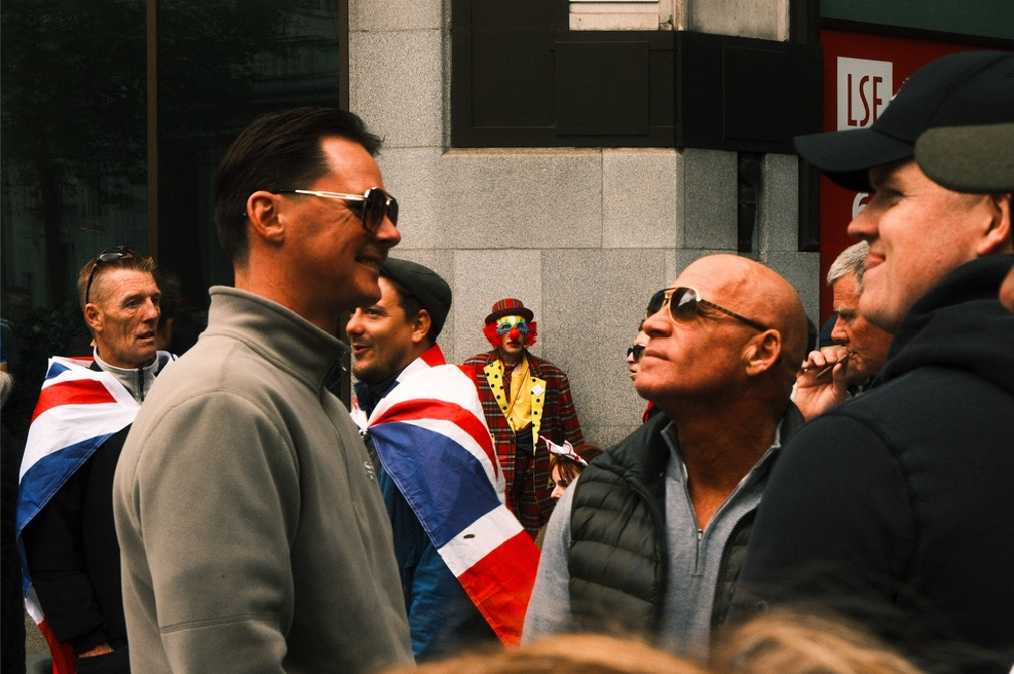
Image: Sebastian Wellington, 2026 // Usage granted by author




Average Rating