 3
3
 0
0
One dull evening, I was scrolling on TikTok when a strange video flooded my screen. It was a short compilation of videos and images of conventionally beautiful women. Loud, energetic music was playing, and robotic affirmations said, ‘I have flawless skin’, I am fit and toned’, and ‘I am stunningly beautiful’ on loop.
The caption read ‘After just one listen, you’ll look like a Victoria’s Secret Angel’. Intrigued, I went to the comments to understand where the trend had emerged from. I discovered this content was known as a ‘subliminal’ video, which layers robotic affirmations under music.
These videos claim grand results, from physical changes like extreme beauty to lifestyle changes, such as finding your dream partner.
But how does a video on TikTok claim to alter your entire physiology? (Alas, at 5’4, I don’t think being a Victoria’s Secret model is my calling).
According to popular subliminal creators, the subconscious is responsible for your inner belief system. If you claim their videos didn’t work for you, you’re informed you have limiting beliefs and you can’t ‘truly believe’. Many creators even make content to help ‘remove’ limiting beliefs, promising faster results.
However, these claims are unfounded. In my research, I could not find one reliable scientific source or study to backup these claims, or any proof of users getting physical results. Whilst there is research for other subliminal manipulation and messaging, it’s extremely different to what you’ll find in a TikTok or YouTube video. It’s a very sophisticated, experimental process. These ‘subliminal’ videos, however, remain speculation and hearsay.
The ‘subconscious’ as many know it culturally doesn’t really exist scientifically. It is widely regarded as a ‘pop psychology’ term, due to deficit of understanding. The subconscious is a descriptor of the automatic processes of the body, such as motor control and emotional processing.
So, whilst the brain does have both unconscious and conscious processing, it cannot metamorphize someone from an ordinary looking person to a supermodel. Attractiveness and physical looks remain result of genetics, environment, and personal preference.
So, after some research into this world, I decided to run my own experiment around these videos and document the results.
Firstly, I considered it only fair to try these videos for myself.
I sourced the most popular videos and creators, promising physical changes after one listen. I also used ‘boosters’; videos that are recommended to boost and fasten results (a contradiction to the ‘one listen’ claim). I chose videos that claimed to make an obvious change, such as extreme hair growth and longer lashes.
I followed all the instructions and advice laid out by creators. This involved drinking plenty of water and listening every day. I did this for a week.
I’m afraid in this timeframe, I saw no physical change. I did however suffer a few headaches and questionable looks from my friends.
Secondly, I compared the results of subliminal suggestions for a male vs female algorithm.
I asked Katie, a 22-year-old PhD student, to search subliminal videos on YouTube. Her recommended feed was flooded with ‘weight loss’, ‘extreme beauty’ and ‘becoming THAT girl’ videos. The thumbnails of these videos often had visibly underweight women, and AI-enhanced photos of popular celebrities, such as Megan Fox and Brooke Shields.
I then asked Jordan, a 27-year-old student, to do the same. His results were not flooded with any appearance-altering videos. Instead, he was suggested subliminal videos for how to ‘ascend in life’ (a phrase reminiscent of the manosphere) and becoming ‘magnetic’.
This comparison already reveals a lot about the culture of subliminal content, and the users. It circles around to misogyny, with women getting videos centred around their looks whilst men are encouraged to focus on success.
Another interesting result is that both sexes seem to face similar levels of extremity. Feelings of inadequacy are sowed into the algorithms, planting false hope that you’ll find a way to be exceptional with a minimum amount of effort.
So, what does this new development in internet culture say about our society today?
It boils down to intense pressure to be extremely attractive, a side effect of the rise of ‘looksmaxxing’, and increasingly extreme beauty standards. And in true social media style, instant gratification comes into play. If you’re promised the looks and life of your dreams after simply watching a video, wouldn’t you? It’s like a wish come true. Why enjoy scrolling funny videos on social media when it can be remarketed to a self-improvement hub?
Ultimately, perhaps the real question isn’t whether listening to a video can make you look like a Victoria’s Secret Angel. It’s why so many of us are being made to feel that we need to.
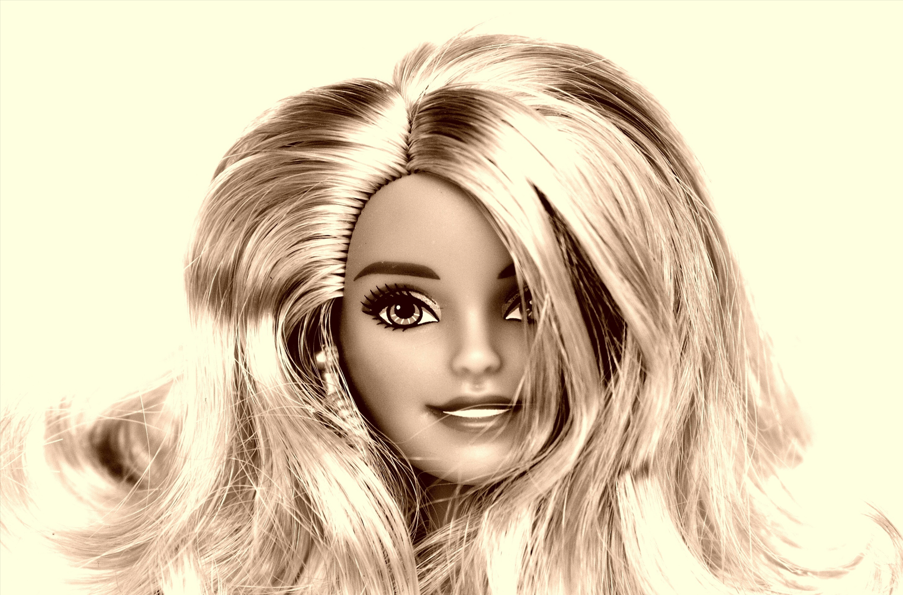
Image Reference: Barbie doll // CC0 1.0
Edited By: Evangeline Shankland





Average Rating