 1
1
 0
0
Imagine living in a country sitting on one of the world’s most sought-after natural resources, only to discover that having it doesn’t necessarily make your country wealthy. It sounds almost contradictory. Surely, if the rest of the world desperately wants something you have, economic prosperity should follow? Yet our second stop on The Political Atlas suggests that the relationship between natural wealth and national prosperity is far more complicated.
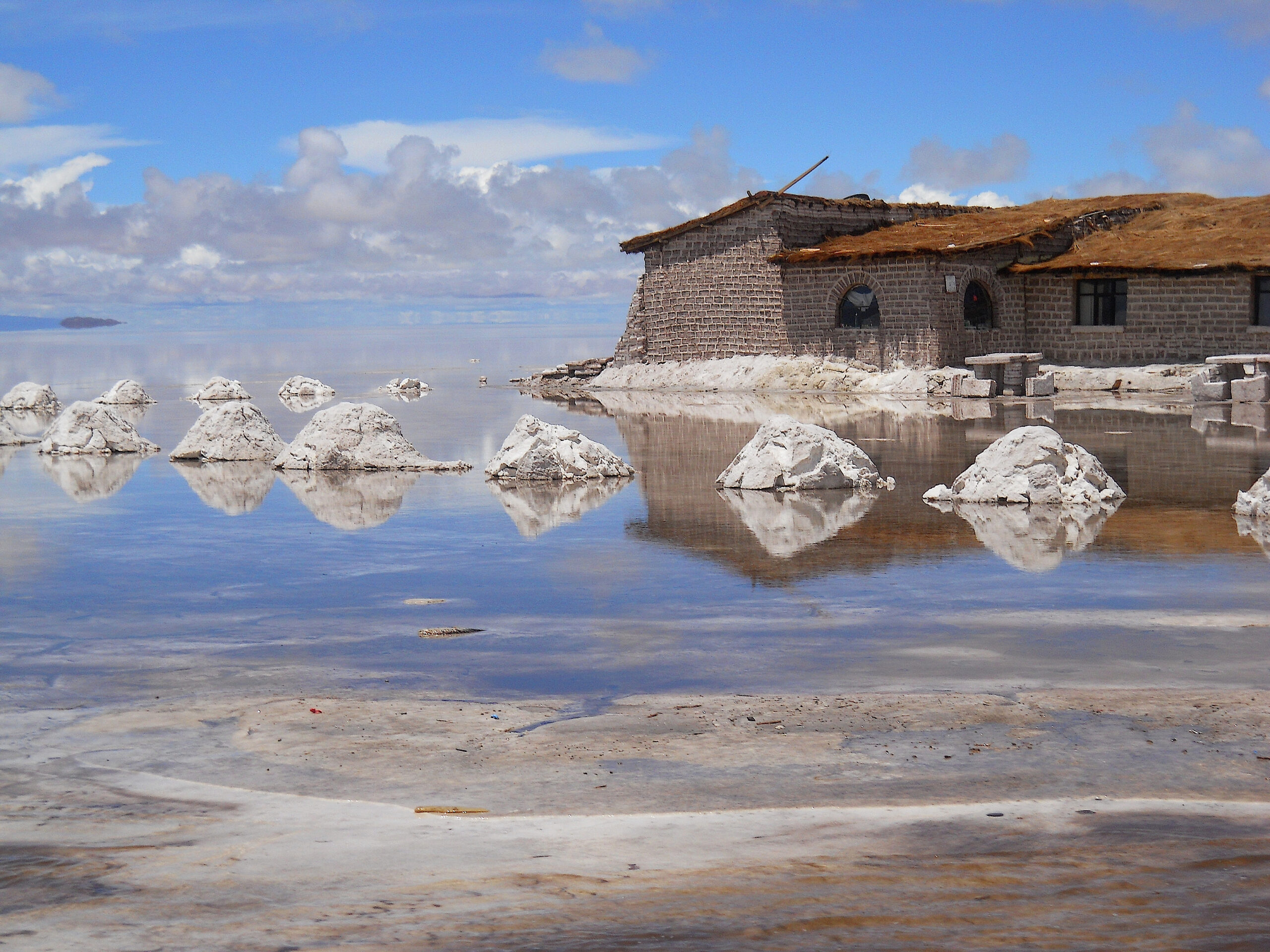
Welcome to Bolivia! A landlocked South American country known for its extraordinary landscapes, Indigenous cultures and vast mineral resources. Beneath its famous salt flats lies an enormous quantity of lithium, a metal increasingly important for electric vehicles and rechargeable batteries. According to the US Geological Survey, Bolivia has approximately 23 million tonnes of identified lithium resources, among the world’s largest concentrations. Yet Bolivia remains a lower middle-income country. so how can a country possess something so valuable and still struggle to turn it into widespread prosperity?
Part of the answer lies in a political and economic concept known as the resource curse. The theory suggests that countries rich in natural resources can sometimes experience weaker economic development, political instability, or inequality rather than the prosperity we might expect; natural wealth, it turns out, is not the same as economic wealth.
For Bolivia, this question is hardly new since its history has long been shaped by the extraction of valuable minerals, particularly silver and tin. For centuries, the country’s resources have attracted international interest, but the benefits of extraction have not always been distributed equally. Lithium therefore represents both an economic opportunity and a familiar political dilemma: who controls a country’s natural wealth, and who ultimately benefits?
However, possessing lithium is only the beginning, as before it can power an electric vehicle, it must be extracted, processed, and sold. This requires technology, investment, infrastructure and access to international markets. Bolivia has struggled to develop large-scale lithium production, despite its enormous identified resources. Neighbouring Chile and Argentina have moved much further into commercial production, showing that what lies beneath the ground does not necessarily determine a country’s economic success.
Another question is who should control the industry, since Bolivia has historically emphasised state ownership of its lithium resources, reflecting concerns that foreign companies could profit disproportionately from the country’s natural wealth. Supporters of state control argue that governments should retain the benefits of strategic resources and use the revenue to fund public services and national development.
On the other hand, strict state control can make it harder to attract investment and specialist expertise. Foreign partnerships may accelerate production, but they also raise questions about sovereignty, transparency and how profits are shared. Bolivia therefore faces a difficult balancing act: how can it welcome the investment needed to develop its lithium industry without surrendering too much control over the resource itself?
Environmental concerns complicate the picture further as lithium is essential to many technologies associated with the global energy transition, but extracting it is not automatically environmentally harmless. Water use, local ecosystems and the interests of communities living near extraction sites all matter. A global transition to cleaner energy could still create local environmental pressures.
Raising an uncomfortable question about the global green transition. If wealthier countries benefit from electric vehicles and battery technologies, while resource-producing countries bear a significant share of the environmental costs, how fairly are the benefits of that transition being distributed?
Of course, it would be misleading to suggest that lithium alone explains Bolivia’s economic difficulties. Falling natural gas production, fiscal pressures and wider political and economic challenges have also affected the country. Nor is the resource curse inevitable. Natural resources can support development when paired with effective institutions, responsible investment, and policies that distribute economic benefits more widely.
Therefore, Bolivia’s experience challenges the assumption that natural resources automatically translate into national wealth, and the real political question becomes not simply how much a country possesses, but whether it has the institutions, bargaining power and economic strategy to turn those resources into permanent prosperity. Perhaps the most valuable thing Bolivia has to offer is not just lithium, but an indication that wealth is not merely something a country discovers beneath its soil. It is also something it must find a way to create, manage and share.
Next week, The Political Atlas heads somewhere completely different.
Edited By Claudia Rea
Article Links:
https://www.tandfonline.com/doi/full/10.1080/02646811.2021.1930708?scroll=top&needAccess=true
https://www.tandfonline.com/doi/full/10.1080/02646811.2021.1930708
https://onlinelibrary.wiley.com/doi/full/10.1111/polp.12365?saml_referrer
Photo / Cover Image Links:




Average Rating